Ballon d’Or Winners Ranked: Players with the Most Awards
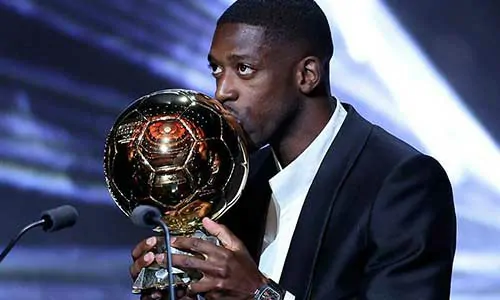
The Ballon d’Or remains the ultimate individual prize in world football. Established by the prestigious French publication France Football in 1956, this golden ball represents the absolute pinnacle of individual success. Over the decades, only an elite group of footballers has ever laid hands on this trophy. In this comprehensive guide, we present the ultimate breakdown of Ballon d’Or Winners Ranked: Players with the Most Awards, looking at the legendary figures who have dominated football history.
Understanding the history of this award requires looking at how football itself has evolved. Initially, only European players were eligible for the prize, which explains why legends like Pelé and Diego Maradona never won it during their active careers. However, after rule changes in 1995 and 2007, the award opened up to players of all nationalities worldwide. Consequently, the competition grew fiercer, leading to eras of absolute dominance by a select few superstars.
Table of Contents
- The History and Evolution of the Ballon d’Or
- Ballon d’Or Winners Ranked: Players with the Most Awards
- Deep Dive: The Elite Multiple Winners
- The Elite Two-Time Winners
- How Club and Country Dominance Influences the Rankings
- Famous Controversies and Notable Snubs
- The Future: Who Will Join the Historic Rankings?
- Conclusion and Final Thoughts
- Frequently Asked Questions (FAQ)
The History and Evolution of the Ballon d’Or
To fully appreciate the achievements of the players on this list, it is essential to understand how the Ballon d’Or evolved. Originally, the award was restricted to European players active in European leagues. For this reason, many historians refer to the pre-1995 era as the “European Footballer of the Year” award.
In 1995, France Football altered the rules to allow non-European players playing for European clubs to be nominated. This immediate change resulted in AC Milan’s Liberian superstar George Weah winning the trophy that very year. Furthermore, in 2007, the eligibility criteria expanded globally, allowing any professional player worldwide to win, regardless of their club or nationality.
In addition to eligibility changes, the voting system has also adapted over time. Journalists from around the globe vote based on three primary criteria: individual performance, team achievements, and class/fair play. Consequently, winning this award multiple times requires unparalleled consistency at both the club and international levels.
Ballon d’Or Winners Ranked: Players with the Most Awards
When analyzing the history of the sport, only a handful of players have managed to claim the trophy more than once. Below is a comprehensive table showing the elite players who have won the award multiple times.
| Rank | Player | Nationality | Total Wins | Years Won |
|---|---|---|---|---|
| 1 | Lionel Messi | Argentina | 8 | 2009, 2010, 2011, 2012, 2015, 2019, 2021, 2023 |
| 2 | Cristiano Ronaldo | Portugal | 5 | 2008, 2013, 2014, 2016, 2017 |
| 3 | Michel Platini | France | 3 | 1983, 1984, 1985 |
| 4 | Johan Cruyff | Netherlands | 3 | 1971, 1973, 1974 |
| 5 | Marco van Basten | Netherlands | 3 | 1988, 1989, 1992 |
| 6 | Franz Beckenbauer | Germany | 2 | 1972, 1976 |
| 7 | Ronaldo Nazário | Brazil | 2 | 1997, 2002 |
| 8 | Alfredo Di Stéfano | Spain / Argentina | 2 | 1957, 1959 |
| 9 | Kevin Keegan | England | 2 | 1978, 1979 |
| 10 | Karl-Heinz Rummenigge | Germany | 2 | 1980, 1981 |
This table illustrates the rare air occupied by these individuals. While winning a single Ballon d’Or is a career-defining achievement, maintaining the standard required to win it multiple times is a testament to extraordinary longevity and drive.
Deep Dive: The Elite Multiple Winners
To understand how these iconic figures reached the top of our list of Ballon d’Or Winners Ranked: Players with the Most Awards, we must analyze their historical campaigns and the unique circumstances that led to their dominance.
Lionel Messi – 8 Awards
Lionel Messi stands alone at the absolute peak of football history. His eight Ballon d’Or awards represent an era of unparalleled brilliance, primarily spent with FC Barcelona before his transitions to Paris Saint-Germain and Inter Miami.
Messi’s journey began with his first win in 2009 under Pep Guardiola. This win kicked off an unprecedented streak of four consecutive awards. During this time, he revolutionized the “False 9” role, culminating in his historic calendar year of 2012, where he scored an astonishing 91 goals.
His subsequent wins in 2015, 2019, 2021, and 2023 showcased his ability to adapt. As his physical pace naturally declined, his playmaker instincts grew. His eighth title in 2023 was primarily secured by his historic performance at the 2022 FIFA World Cup, where he guided Argentina to glory in Qatar, cementing his legacy forever.
Cristiano Ronaldo – 5 Awards
Cristiano Ronaldo’s five Ballon d’Or awards highlight a career built on supreme athleticism, relentless work ethic, and clutch goalscoring. His rivalry with Lionel Messi pushed both players to heights never before seen in the sport.
Ronaldo won his first Ballon d’Or in 2008 as a young winger for Manchester United, guiding them to UEFA Champions League glory. Following his world-record transfer to Real Madrid, he transformed into an unstoppable goalscoring machine.
He claimed consecutive awards in 2013 and 2014, and again in 2016 and 2017. These victories coincided with Real Madrid’s historic Champions League dominance, where Ronaldo consistently finished as the tournament’s top goalscorer. His ability to perform in high-pressure matches remains his defining quality.
Michel Platini – 3 Awards
Before the Messi-Ronaldo duopoly, French midfielder Michel Platini was the first player in history to win the Ballon d’Or three times consecutively, doing so between 1983 and 1985.
Operating as an elegant playmaker for Juventus and the French national team, Platini possessed incredible vision and a lethal free-kick technique. He was the driving force behind France’s victory in the 1984 European Championship, where he scored nine goals in just five matches, a record that still stands today.
Johan Cruyff – 3 Awards
Johan Cruyff was not just a great player; he was a football philosopher. As the primary exponent of “Total Football” with Ajax, Barcelona, and the Netherlands national team, Cruyff changed how the game was played globally.
He won his first award in 1971 with Ajax, followed by consecutive wins in 1973 and 1974. Cruyff’s intelligence on the pitch allowed him to occupy any position, making him nearly impossible for defenders to mark. His legacy continues to influence modern coaches today.
Marco van Basten – 3 Awards
Marco van Basten is widely regarded as one of the most complete center-forwards in the history of the sport. The Dutch striker won the Ballon d’Or in 1988, 1989, and 1992 while playing for AC Milan during their golden era.
Van Basten possessed incredible technical ability, heading strength, and an eye for spectacular goals, such as his famous volley against the Soviet Union in the Euro 1988 final. Unfortunately, severe ankle injuries forced him to retire prematurely at the age of 28, leaving fans to wonder how many more awards he could have accumulated.
The Elite Two-Time Winners
Just below the tier of three-time winners lies a prestigious group of players who have won the award twice. Each of these players left an indelible mark on the sport during their respective eras.
Franz Beckenbauer, known as “Der Kaiser,” revolutionized the role of the sweeper (libero). He won the award in 1972 and 1976, guiding Bayern Munich and West Germany to numerous domestic and international titles. He remains one of the few defensive players to win the award multiple times.
Ronaldo Nazário, affectionately known as “O Fenômeno,” captured his two awards in 1997 and 2002. His first win made him the youngest recipient of the award at just 21 years old. Despite suffering devastating knee injuries, his heroic comeback to lead Brazil to the 2002 World Cup title earned him his second well-deserved trophy.
Additionally, English winger Kevin Keegan won consecutive awards in 1978 and 1979 with Hamburger SV, while Karl-Heinz Rummenigge matched this feat in 1980 and 1981 with Bayern Munich. Alfredo Di Stéfano, the talisman of Real Madrid’s early European Cup dominance, also secured two awards in 1957 and 1959.
How Club and Country Dominance Influences the Rankings
When analyzing the data behind the list of Ballon d’Or Winners Ranked: Players with the Most Awards, clear patterns emerge regarding which clubs and countries produce the most winners.
Historically, playing for powerhouse clubs in Spain or Italy has significantly increased a player’s chances of winning. Real Madrid and Barcelona lead the club rankings, with both clubs heavily benefiting from the modern era of Messi and Ronaldo. Consequently, players operating outside these elite clubs often face an uphill battle to gain the necessary recognition from voters.
Furthermore, international tournaments play an incredibly influential role in voting years that feature a FIFA World Cup or a UEFA European Championship. Historically, a stellar performance in a month-long international tournament has often outweighed a consistent club season. For instance, Fabio Cannavaro’s 2006 win was almost entirely fueled by his captaincy of Italy’s World Cup-winning defense.
To view detailed statistical breakdowns of club success in European competitions, readers can consult the official statistics database on UEFA’s Official Website.
Famous Controversies and Notable Snubs
Like any subjective voting system, the Ballon d’Or has seen its fair share of debate and controversy over the years. Many football fans and experts argue that several legendary players were unjustly denied the award.
One of the most prominent modern controversies occurred in 2020 when France Football cancelled the award due to the COVID-19 pandemic. This decision deeply frustrated fans of Robert Lewandowski, who had enjoyed a historic treble-winning season with Bayern Munich, scoring 55 goals in 47 matches. Many felt he was also unfairly overlooked in 2021 when Lionel Messi claimed the trophy.
Other famous controversial years include:
- 2010: Wesley Sneijder won the treble with Inter Milan and reached the World Cup final with the Netherlands, yet failed to finish on the podium.
- 2013: Franck Ribéry won the treble with Bayern Munich but finished third behind Cristiano Ronaldo and Lionel Messi.
- 2003: Thierry Henry’s historic individual season with Arsenal was overlooked in favor of Pavel Nedvěd.
These debates highlight the eternal conflict in voting criteria: should the award go to the player with the best individual statistics, or the player who won the most important team trophies?
The Future: Who Will Join the Historic Rankings?
With the historic era of Lionel Messi and Cristiano Ronaldo drawing to a close, the football world is transitioning into a new era. The question now is: which young superstars will eventually join the elite ranks of Ballon d’Or Winners Ranked: Players with the Most Awards?
Erling Haaland and Kylian Mbappé have long been tipped as the natural successors to the throne. Haaland’s record-breaking goalscoring exploits with Manchester City and Mbappé’s explosive playmaking abilities put them in constant contention. Furthermore, the rise of Jude Bellingham and Vinícius Júnior at Real Madrid has added incredibly strong competition to the mix.
Additionally, the emergence of sensational talents like Lamine Yamal suggests that the next decade of football will be highly competitive. Unlike the previous era, which was dominated by two individuals, we are likely to see a much wider distribution of winners over the coming years.
For detailed, up-to-date player statistics and career performance tracking, fans often refer to Transfermarkt.
Conclusion and Final Thoughts
In conclusion, the history of the Ballon d’Or is a reflection of football’s greatest eras and talents. From the early dominance of Johan Cruyff and Michel Platini to the modern, record-breaking rivalry between Lionel Messi and Cristiano Ronaldo, this trophy remains the ultimate dream for every professional footballer.
Winning this award once is a legendary achievement, but entering the ranks of multiple-time winners requires a rare blend of talent, dedication, team success, and longevity. As the sport moves into its next chapter, we look forward to seeing which of today’s young talents will write their names into the history books alongside these giants of the game.
What do you think? Will Lionel Messi’s record of eight Ballon d’Or awards ever be broken, or is his legacy completely untouchable? Share your thoughts and join the discussion in the comments below!
Frequently Asked Questions (FAQ)
1. Who has won the most Ballon d’Or awards in history?
Lionel Messi has won the most Ballon d’Or awards in history, claiming the trophy a record eight times (2009, 2010, 2011, 2012, 2015, 2019, 2021, and 2023).
2. Why did Pelé and Diego Maradona never win the Ballon d’Or?
Until 1995, the Ballon d’Or was only open to European players playing in European leagues. Because Pelé and Diego Maradona were non-European, they were ineligible to win the award during their active playing careers.
3. What is the difference between the Ballon d’Or and FIFA’s The Best award?
The Ballon d’Or is organized by the French magazine France Football and is voted on exclusively by international journalists. Meanwhile, FIFA’s “The Best” award is organized by football’s governing body and is voted on by national team coaches, captains, journalists, and fans.
4. Who is the youngest player to ever win the Ballon d’Or?
Ronaldo Nazário is the youngest player to win the award. The Brazilian striker won his first Ballon d’Or in 1997 at the age of 21 years and 3 months.
5. Has a defender or goalkeeper ever won the Ballon d’Or?
Yes, though it is rare. Lev Yashin is the only goalkeeper to win the award (1963). Defensively minded players like Franz Beckenbauer (1972, 1976), Matthias Sammer (1996), and Fabio Cannavaro (2006) have also claimed the prize.
6. How are the votes for the Ballon d’Or decided?
A specialized panel of sports journalists from the top 100 countries in the FIFA men’s rankings vote for their top choices. They evaluate individual performances, team success, and overall sportsmanship throughout the season.