Box-to-Box Midfielder Explained: Duties, Skills and Tactical Importance
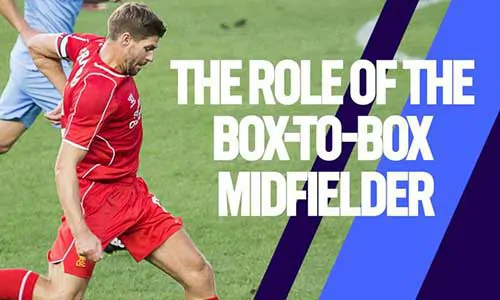
Modern football is a fast-evolving sport where tactical systems change constantly. However, one specific player archetype remains indispensable to almost every elite manager: the all-action engine room operator. In this comprehensive guide, we provide a deep, tactical breakdown of this crucial role. Here is the Box-to-Box Midfielder Explained: Duties, Skills and Tactical Importance to help you understand how these elite athletes dominate both ends of the pitch.
Whether you are a coach looking to optimize your tactical setup, a player striving to improve your game, or an enthusiastic fan trying to understand the nuances of the pitch, mastering this role is essential. Below, we break down every dimension of this demanding position.
Table of Contents
1. What is a Box-to-Box Midfielder?
To put it simply, a box-to-box midfielder (often referred to as an “8” in traditional squad numbering) is a central midfielder whose responsibilities are equally divided between defending and attacking. They get their name from their primary job description: running from their own penalty box to the opponent’s penalty box throughout the entire ninety minutes of a match.
Historically, the position was popularized in British football, where physical endurance and direct play were highly valued. Over time, European and South American influences have added tactical sophistication to this role. Today, these players are not just runners; they are highly skilled technical assets who can dictate the tempo of play, break lines with passing, and score crucial goals.
Furthermore, in modern football terminology, this player serves as the ultimate transitional link. Without a dynamic presence in the center of the pitch, a team can easily become disjointed, leaving a massive gap between the defensive line and the attacking unit. Consequently, having an elite box-to-box player is often the difference between winning and losing the midfield battle.
2. The Crucial Duties of the Box-to-Box Midfielder
To fully grasp the Box-to-Box Midfielder Explained: Duties, Skills and Tactical Importance, we must dissect what these players actually do during the different phases of a match. Their duties can be categorized into three key areas: defensive contributions, transitional play, and offensive output.
Defensive Duties: Protecting the Backline
When the team is out of possession, the box-to-box midfielder must drop deep to support the defensive midfielder (the “6”). They are responsible for clogging up space in the central channels, preventing opponents from playing easy passes into the striker’s feet.
- Pressing and Intercepting: Engaging in high-intensity pressing to disrupt the opponent’s build-up play.
- Tracking Runners: Following opposing midfielders who make late runs from deep positions into the penalty area.
- Winning Second Balls: Utilizing physical strength to win aerial duels and loose balls in the middle third of the pitch.
Transitional Duties: Driving the Team Forward
Transition is where these players truly shine. Once the ball is recovered, they must transition the team from a defensive shape into an attacking format as quickly as possible.
For instance, they might pick up the ball deep inside their own half and immediately carry it forward via a powerful progressive run. Alternatively, they can use their passing range to find wingers or advanced playmakers in space. Because they bridge the gap between defense and attack, their decision-making during transition must be quick and precise.
Offensive Duties: Creating and Scoring Goals
Unlike a pure defensive midfielder, a box-to-box midfielder has the license to enter the opposition’s penalty box. They often score goals by making delayed, late runs into the penalty area, capitalizing on the space created by the forwards who drag defenders away.
Additionally, they support the attack by occupying the “half-spaces” on the edge of the box, offering a passing option for players out wide. From these positions, they can either deliver crosses, play slide-rule passes, or unleash long-range shots on goal.
3. Key Skills Required for the Role
Operating in this position requires an incredibly diverse and highly developed skillset. Because they have to do a little bit of everything, these players must be all-rounders with no glaring weaknesses in their game.
Below is a detailed breakdown of the technical, physical, and mental skills required to master this demanding position:
| Skill Category | Key Attributes | Why It Matters |
|---|---|---|
| Physical | Elite Stamina, Acceleration, Core Strength | Allows the player to cover up to 12-13 kilometers per match and win physical duels. |
| Technical | Progressive Passing, Ball Carrying, Tackling, Shooting | Enables them to escape tight pressure, distribute accurately, and finish chances. |
| Mental | Tactical Awareness, Work Rate, Decision Making | Helps the player recognize when to charge forward and when to stay back to cover. |
Unmatched Physical Endurance
First and foremost, a box-to-box player must possess world-class cardiovascular endurance. Without an exceptional engine, a player will simply tire out by the 60th minute, leaving their team vulnerable in midfield. They must combine long-distance stamina with the ability to perform repeated, high-intensity sprints throughout the match.
Elite Tactical Awareness and Decision Making
In addition to physical prowess, intelligence is vital. A player must constantly scan the pitch to understand where the space is. If they commit forward at the wrong time, they leave their defense exposed to a dangerous counter-attack. Conversely, if they are too cautious, the team will lack numbers in the attacking phase.
Therefore, knowing when to join the attack and when to sit deep to preserve the team’s defensive shape is a mental skill that only the finest players master.
4. Tactical Importance in Different Formations
Understanding how managers deploy this role across various formations is key to realizing the full scope of the Box-to-Box Midfielder Explained: Duties, Skills and Tactical Importance. Depending on the tactical setup, the player’s specific instructions will shift slightly.
The Box-to-Box Midfielder in a 4-3-3 System
In a standard 4-3-3 formation, the midfield trio usually consists of a defensive midfielder (the “6”), a creative playmaker (the “10” or advanced “8”), and a traditional box-to-box midfielder (the balanced “8”).
In this system, the box-to-box player acts as the glue. When the creative playmaker drifts forward to join the attack, the box-to-box midfielder drops slightly deeper to protect the space next to the defensive midfielder. However, when the ball is moved to the opposite flank, they will make late runs into the box to pose an extra goal-scoring threat.
The Box-to-Box Midfielder in a 4-2-3-1 System
In a 4-2-3-1 setup, the box-to-box player usually operates as part of the double-pivot (the two deeper midfielders behind the attacking midfield trio).
Here, the partnership is critical. While one of the pivot players acts as a dedicated holding midfielder, the box-to-box player is given the freedom to drive forward with the ball. They must be highly proficient in progressive passing to feed the ball to the attacking midfielders, wingers, and the lone striker quickly.
Tactical Importance: How Managers Deploy the Box-to-Box Midfielder
In modern systems, such as the 3-5-2 or the 3-4-2-1, the tactical importance of the box-to-box player is amplified even further. In a three-at-the-back system, the wing-backs provide the width, meaning the central midfielders must cover a vast amount of vertical space.
Consequently, the box-to-box midfielder in a 3-5-2 must slide wide to support the wing-backs defensively, while still making central runs to support the two strikers. Without highly mobile, intelligent central midfielders, three-at-the-back formations easily collapse under wide defensive pressure.
For deep tactical analysis of how modern coaches structure these systems, you can explore the instructional resources on The Coaches’ Voice, which provides excellent insights into professional football coaching philosophies.
5. Legendary and Modern Examples of the Role
To fully appreciate this position, it is highly useful to look at the players who have defined it over the years. By analyzing their styles, we can see how the position has adapted across different eras.
The Pioneers: Steven Gerrard, Patrick Vieira, and Roy Keane
During the late 1990s and 2000s, the English Premier League was dominated by legendary box-to-box midfielders.
- Steven Gerrard: The quintessential Liverpool captain possessed an extraordinary passing range, ferocious tackling ability, and a knack for scoring spectacular, long-range goals in clutch moments.
- Patrick Vieira: A towering physical presence for Arsenal, Vieira combined brute strength with incredible technical elegance, allowing him to dominate midfields single-handedly.
- Roy Keane: While often remembered for his aggression, the Manchester United legend was an incredibly intelligent passer who controlled the tempo of matches while covering every blade of grass.
The Tactical Geniuses: Yaya Touré and Arturo Vidal
In the 2010s, players like Yaya Touré and Arturo Vidal redefined the physical boundaries of the position. Touré, during his prime at Manchester City, was virtually unstoppable when driving forward with the ball, combining raw power with delicate skill. Meanwhile, Vidal represented the high-intensity, aggressive style, winning tackles deep in his own half and scoring crucial goals for Juventus and Bayern Munich.
Modern Masters: Jude Bellingham, Federico Valverde, and Declan Rice
Today, the role is occupied by a new generation of incredibly athletic and versatile players. Jude Bellingham, for instance, has demonstrated how a box-to-box player can morph into a highly productive goalscorer when given tactical freedom. Similarly, Federico Valverde of Real Madrid utilizes his blistering pace and tireless work rate to excel in multiple tactical setups.
For official statistics and performance tracking of these modern elite midfielders, check out the data resources on the FIFA Training Centre.
6. FAQs: Box-to-Box Midfielder Explained: Duties, Skills and Tactical Importance
To help summarize the core concepts, we have compiled answers to some of the most frequently asked questions about this crucial footballing role.
Q1: What is the difference between a box-to-box midfielder and a defensive midfielder?
A: A defensive midfielder (the “6”) primarily focuses on protecting the defense, intercepting passes, and staying in a disciplined, deep position. In contrast, a box-to-box midfielder (the “8”) has significant offensive duties, frequently running forward to join the attack and enter the opposition penalty area.
Q2: What shirt number does a box-to-box midfielder typically wear?
A: They traditionally wear the number 8 shirt. This symbolizes their positioning and role as a link between the defensive midfielder (typically number 6) and the attacking playmaker or secondary striker (typically number 10).
Q3: Why is the box-to-box midfielder so important in transition?
A: Because they possess both defensive awareness and attacking threat, they are perfectly positioned to collect the ball from deep areas and drive it forward, either by passing or carrying, turning defensive actions into goalscoring opportunities quickly.
Q4: Can a box-to-box midfielder play in a two-man midfield?
A: Yes, they frequently play in a two-man midfield (such as in a 4-4-2 or 4-2-3-1). However, they must partner with a tactically disciplined holding midfielder who can cover the space when the box-to-box player drives forward.
Q5: Who is the best example of a modern box-to-box midfielder?
A: Players like Jude Bellingham, Federico Valverde, and Nicolò Barella are currently considered outstanding examples, as they combine elite athleticism with the technical skills to influence both defense and attack.
Summary of the Tactical Engine
In conclusion, having a versatile engine in the middle of the pitch is vital for any team aiming to control matches. We hope this breakdown of the Box-to-Box Midfielder Explained: Duties, Skills and Tactical Importance has helped clarify how these incredibly hardworking players impact the modern game.
Their ability to tackle, carry, distribute, and score makes them the ultimate tactical Swiss Army knife. As tactical systems continue to prioritize high-pressing and rapid transitions, the value of the elite box-to-box midfielder will undoubtedly remain higher than ever.
What do you think?
Who is your favorite box-to-box midfielder of all time? Let us know your thoughts in the comments section below, and don’t forget to share this article with fellow football fans!