Comparing FIFA World Cup 2026 Stadiums: Facilities, Capacity and Fan Experience
The anticipation for the biggest sporting event in history is reaching a fever pitch. As the United States, Canada, and Mexico prepare to co-host the historic 48-team tournament, fans and analysts alike are looking closely at the selected venues. Comparing FIFA World Cup 2026 Stadiums: Facilities, Capacity and Fan Experience is essential for understanding how this multi-nation tournament will look, feel, and function. From high-tech architectural wonders in the United States to iconic, historic arenas in Mexico and modern, compact venues in Canada, each stadium offers something completely unique for traveling supporters.
In this comprehensive guide, we will analyze and evaluate all 16 host venues. By looking closely at the structural designs, seating capacities, hospitality options, and local transit networks, we can paint a clear picture of what spectators can expect. Whether you are planning to attend games in Vancouver, Mexico City, or Miami, understanding these details will help you plan the ultimate tournament journey.
Table of Contents
- Overview of the Historic Three-Nation Tournament
- Comparing Capacity: The Giants vs. The Intimate Arenas
- State-of-the-Art Facilities and Sustainable Tech
- Fan Experience: Transport, Atmosphere, and Local Culture
- Detailed Breakdown of the 16 Host Venues
- The Grass Challenge: Natural vs. Artificial Turf
- Frequently Asked Questions (FAQ)
- Conclusion and Final Thoughts
Overview of the Historic Three-Nation Tournament
The 2026 tournament marks the first time three nations have collaborated to host a FIFA World Cup. Consequently, the geographical spread is unprecedented, stretching from Vancouver on the West Coast of Canada to Monterrey in North-Eastern Mexico and Boston on the Atlantic coast of the United States. To manage travel fatigue, FIFA has divided the host cities into three distinct regional clusters: West, Central, and East.
Ultimately, selecting the right venues was a rigorous process. FIFA evaluated potential host cities based on rigorous infrastructure criteria, security measures, and airport capacities. As a result, the final list of 16 stadiums contains a mix of legendary soccer cathedrals and cutting-edge American football stadiums. Understanding and comparing these structures reveals how deeply the sport is evolving across North America.
Comparing Capacity: The Giants vs. The Intimate Arenas
When analyzing the scale of these venues, seating capacity is often the first metric that catches the eye. The tournament will feature some of the largest stadiums ever used for a World Cup. For instance, AT&T Stadium in Arlington (Dallas) and the legendary Estadio Azteca in Mexico City can both accommodate over 80,000 screaming fans. These mega-venues are built to deliver high-energy, deafening atmospheres for high-stakes matches.
On the other hand, some of the smaller venues offer a closer, more intense viewing perspective. BMO Field in Toronto, even after planned temporary expansions, will host around 45,000 spectators. This presents a fascinating contrast for fans seeking different match-day environments. While the giant bowls offer awe-inspiring scale, the smaller, soccer-specific stadiums often keep fans closer to the action on the pitch.
| Stadium Name | Location | Expected FIFA Capacity | Primary Surface Type |
|---|---|---|---|
| Estadio Azteca | Mexico City, Mexico | 87,523 | Natural Grass |
| MetLife Stadium | East Rutherford (NY/NJ) | 82,500 | Temporary Grass Over Turf |
| AT&T Stadium | Arlington (Dallas), USA | 80,000 (Expandable) | Temporary Grass Over Turf |
| Lumen Field | Seattle, USA | 69,000 | Temporary Grass Over Turf |
| BC Place | Vancouver, Canada | 54,500 | Temporary Grass Over Turf |
| Estadio BBVA | Monterrey, Mexico | 53,500 | Natural Grass |
Why Comparing FIFA World Cup 2026 Stadiums: Facilities, Capacity and Fan Experience Matters for Supporters
Supporters traveling from Europe, South America, Asia, and Africa will encounter stadiums built primarily for two completely different sports: gridiron football and association football. Therefore, comparing these configurations is vital. American football stadiums are built with immense luxury suites and wide concourses, but their playing fields are narrower than those preferred by FIFA. Understanding how these venues adapt to soccer standards is key to anticipating sightlines and seating comfort.
Furthermore, local climates will vary wildly during the North American summer. A fan watching a game in the covered, climate-controlled comfort of Houston’s NRG Stadium will have a vastly different experience than someone sitting in the open-air, humid afternoon heat of Miami’s Hard Rock Stadium. Thus, examining the individual environmental controls of each stadium is just as important as checking the seating chart.
State-of-the-Art Facilities and Sustainable Tech
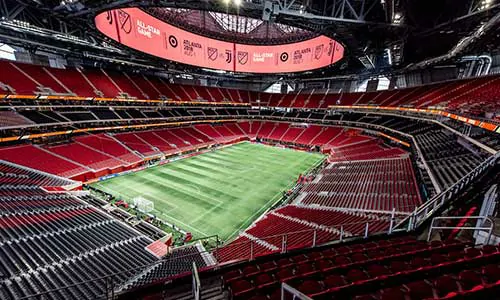
Modern sports architecture is no longer just about concrete and steel. Today, sustainability and connectivity are at the heart of design. For instance, Mercedes-Benz Stadium in Atlanta features a unique retractable roof designed to look like a camera aperture, accompanied by a massive 360-degree halo video board. This ensures that every seat in the house has an unobstructed view of replays and statistics.
In addition, many of the US venues hold LEED (Leadership in Energy and Environmental Design) certifications. These eco-friendly certifications highlight advanced rainwater harvesting systems, solar panel arrays, and energy-efficient lighting. When comparing FIFA World Cup 2026 Stadiums: Facilities, Capacity and Fan Experience, the focus on reducing carbon footprints is highly visible in modern facilities like Levi’s Stadium in Santa Clara, which features a lush green roof that helps regulate internal temperatures naturally.
- Retractable Roofs: Found in Dallas, Houston, Atlanta, and Vancouver, ensuring matches remain unaffected by extreme summer weather.
- Giant Video Displays: Designed to offer ultra-high-definition graphics, ensuring replay clarity from any angle.
- Premium Seating Options: Extensive luxury suites and club-level seating, raising the bar for corporate hospitality.
Fan Experience: Transport, Atmosphere, and Local Culture
An unforgettable World Cup experience goes far beyond the ninety minutes of play on the pitch. Crucially, the journey to and from the stadium plays a major role in overall fan satisfaction. Some venues, such as Lumen Field in Seattle and BMO Field in Toronto, are situated close to downtown urban centers. This allows supporters to enjoy local restaurants, bars, and public plazas before walking directly to the gates.
Conversely, several major US NFL stadiums, including Gillette Stadium in Foxborough and MetLife Stadium in East Rutherford, are located in suburban areas. These stadiums rely on dedicated commuter rail lines, shuttle buses, and massive parking lots famous for classic tailgating culture. This means fans must plan for longer transit times but can also look forward to unique pre-match fan festivals in the parking zones.
In Mexico, the fan experience is deeply rooted in passionate local soccer culture. Estadio Azteca, located in historic Mexico City, offers an electric, carnival-like atmosphere unmatched by most modern arenas. Street food vendors selling tacos, local merchandise, and traditional snacks line the approaches to the stadium, offering an authentic taste of Mexican football passion.
Detailed Breakdown of the 16 Host Venues
To truly compare the environments, let us explore the structural and cultural highlights of the selected stadiums across the three host nations.
The West Coast Contenders
SoFi Stadium (Los Angeles, USA): This architectural marvel is currently the most expensive stadium in the world. Built with a translucent canopy roof and a double-sided 4K video board hanging over the field, SoFi offers an incredibly futuristic atmosphere. However, due to its narrow pitch footprint, construction crews must undergo minor modifications to meet FIFA’s strict field dimension requirements.
Lumen Field (Seattle, USA): Renowned for its unique, acoustic-boosting canopy design, Lumen Field is famous for being incredibly loud. Located alongside downtown Seattle, it provides outstanding views of the city skyline and offers an urban fan experience deeply supported by a passionate local soccer community.
BC Place (Vancouver, Canada): Having successfully hosted the 2015 FIFA Women’s World Cup Final, this venue is well-equipped for international crowds. Its central location, modern cable-supported retractable roof, and excellent public transport connections make it highly accessible and user-friendly for visiting fans.
Levi’s Stadium (San Francisco/Santa Clara, USA): Positioned in the heart of Silicon Valley, this eco-friendly venue relies heavily on high-tech integrations, including seamless high-speed Wi-Fi, eco-friendly solar panels, and a smart app designed for easy in-seat concession ordering.
Estadio Akron (Guadalajara, Mexico): Architecturally designed to resemble a grass-covered volcano blending into the local landscape, this modern arena offers excellent, unobstructed sightlines and a highly energetic local crowd.
The Central Powerhouses
Estadio Azteca (Mexico City, Mexico): As the historic crown jewel of Mexican soccer, the Azteca is set to make history by hosting its third World Cup opening match. Although it lacks some of the hyper-modern luxury suites of newer US stadiums, its intimidating scale, high elevation, and rich history make it an iconic venue for soccer purists.
AT&T Stadium (Arlington/Dallas, USA): Affectionately known as “Jerry World,” this massive structure features a retractable roof and one of the largest suspended video screens in the world. Its vast indoor plaza makes it a prime candidate to host highly critical knockout-stage matches.
NRG Stadium (Houston, USA): This fully air-conditioned venue features a retractable roof, ensuring players and spectators are fully shielded from the intense Texas summer heat. Its extensive experience hosting major global sporting events guarantees highly polished operations.
Mercedes-Benz Stadium (Atlanta, USA): Famous for its innovative circular video board and highly affordable fan-first food pricing, this stadium is a fan favorite. It utilizes a state-of-the-art retractable roof system that protects the field while maintaining a vibrant, open-air feel when open.
Estadio BBVA (Monterrey, Mexico): Known as “The Steel Giant,” this modern stadium offers breathtaking, direct views of the nearby Cerro de la Silla mountain range. Its close, steep seating bowl puts spectators right on top of the action, creating a highly intense home-pitch advantage.
GEHA Field at Arrowhead Stadium (Kansas City, USA): Officially recognized as one of the loudest open-air stadiums in the world, Arrowhead offers a classic, deeply authentic Midwestern sports culture, complete with extensive pre-match tailgating experiences.
The Eastern Seaboard Venues
MetLife Stadium (East Rutherford/NY/NJ, USA): Located just across the river from New York City, this massive stadium will host the highly anticipated World Cup Final. Its neutral, customizable exterior lighting system and vast seating bowl make it a fitting stage for the tournament’s grand finale.
Hard Rock Stadium (Miami, USA): This multi-purpose venue features an expansive open-air canopy designed to shade 90% of the spectators while keeping the pitch open to natural sunlight. Its vibrant local culture and experience hosting international friendlies make it a highly attractive destination for global travelers.
Gillette Stadium (Foxborough/Boston, USA): Set in a scenic, forested valley outside Boston, this stadium features a newly renovated lighthouse and a massive outdoor plaza, offering a picturesque and historic New England backdrop.
Lincoln Financial Field (Philadelphia, USA): Celebrated for its passionate local fan base, this stadium utilizes solar panels and wind turbines to generate clean energy, showcasing a solid commitment to sustainable tournament operations.
BMO Field (Toronto, Canada): As the most intimate venue of the tournament, BMO Field offers a classic European-style soccer atmosphere. Its location along the scenic Exhibition Place waterfront allows fans to walk to nearby downtown attractions with ease.
The Grass Challenge: Natural vs. Artificial Turf
One of the most complex operational aspects of Comparing FIFA World Cup 2026 Stadiums: Facilities, Capacity and Fan Experience is the playing surface. FIFA strictly mandates that all World Cup matches must be played on high-quality, natural grass. However, several of the premier US venues, including MetLife Stadium, AT&T Stadium, and Mercedes-Benz Stadium, typically utilize synthetic turf for American football games.
To overcome this challenge, stadium operators are investing in advanced, temporary grass turf systems. These systems require installing specialized underlayment, drainage systems, and artificial grow lights to keep the real grass healthy in indoor or shaded environments. This technical transition is incredibly complex, requiring precise execution to ensure consistent ball roll and prevent player injuries.
Key Takeaways When Comparing FIFA World Cup 2026 Stadiums: Facilities, Capacity and Fan Experience
When we look at the entire tournament landscape, we can draw several clear conclusions. First, the infrastructure in place is arguably the most advanced ever assembled for a sporting event. Second, the fan experience will vary wildly depending on whether you are visiting a downtown, soccer-specific venue or a suburban mega-stadium. Third, the sheer variety of architectural designs ensures that every match day will feel unique and distinct.
For fans planning their trips, the key is preparation. Understanding the transport options, climate control systems, and surrounding entertainment districts is critical to making the most of this historic event. Ultimately, the 2026 World Cup will showcase how varying stadium philosophies can come together to host a truly memorable global celebration.
Frequently Asked Questions (FAQ)
Which stadium will host the 2026 FIFA World Cup Final?
MetLife Stadium in East Rutherford, New Jersey (New York area), has been officially selected to host the grand final on July 19, 2026.
How will stadiums with artificial turf accommodate FIFA’s natural grass rule?
Venues like AT&T Stadium and Mercedes-Benz Stadium are installing temporary, highly advanced natural grass systems on top of their current turf, using specialized root-growing technologies and indoor lighting arrays.
Which host stadium has the largest seating capacity?
The historic Estadio Azteca in Mexico City features the highest capacity, expected to accommodate over 87,000 passionate spectators during the tournament.
Are there any fully air-conditioned stadiums on the list?
Yes. NRG Stadium in Houston and AT&T Stadium in Dallas both feature fully retractable roofs and advanced climate-control systems to shield fans and players from extreme summer heat.
How is transit being managed for suburban stadiums?
Host cities are actively expanding their public transport networks, including commuter rail shuttles, dedicated park-and-ride bus services, and organized rideshare zones to handle the large influx of international travelers.
What makes the fan experience in Mexico unique?
Mexico’s stadiums offer a rich, historic connection to football history, vibrant local food options surrounding the grounds, and an incredibly passionate, festival-like atmosphere inside the stands.
Conclusion and Final Thoughts
Ultimately, Comparing FIFA World Cup 2026 Stadiums: Facilities, Capacity and Fan Experience reveals a fascinating tapestry of sporting culture across North America. From the high-tech, luxury-laden stadiums of the United States to the historic soccer sanctuaries of Mexico and the intimate, welcoming venues of Canada, each site brings something memorable to the table.
As preparations continue and stadium modifications get underway, excitement will only grow. For supporters worldwide, now is the perfect time to start planning travel routes, analyzing host cities, and choosing which iconic stadiums to visit. Stay updated with official announcements, and prepare to witness a truly historic, groundbreaking chapter in global sports history.