False 9 Explained: Role, Tactical Impact and Legendary Players
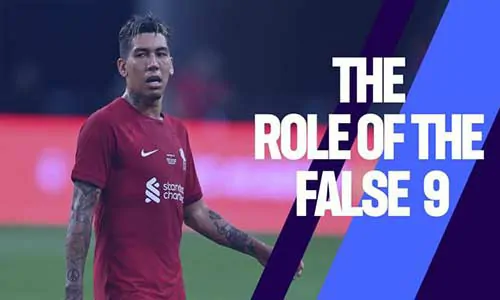
Table of Contents
- Introduction to the False 9
- What is a False 9? Defining the Concept
- False 9 Explained: Role, Tactical Impact and Legendary Players
- The Historical Evolution of the Deep-Lying Forward
- Tactical Mechanics: How the False 9 Manipulates Space
- Essential Attributes of an Elite False 9
- Traditional Striker vs. False 9: Key Differences
- Profiles of Legendary False 9 Players
- How Modern Defenses Counter the False 9
- Frequently Asked Questions (FAQ)
- Conclusion and Final Thoughts
Football is a game played with the feet, but it is ultimately decided by the mind. Over the decades, tactical innovations have reshaped how we perceive positions, space, and movement on the pitch. Among these innovations, few concepts have generated as much fascination and tactical debate as the deep-lying playmaker operating in the striker position. In this comprehensive guide, we present the False 9 Explained: Role, Tactical Impact and Legendary Players, dissecting how this unique role revolutionized modern football tactics and paved the way for fluid, positionless attacking systems.
Historically, central strikers were judged purely on their physicality, aerial dominance, and goal-scoring instincts within the penalty box. However, the introduction of a forward who deliberately abandons the frontline altered this dynamic entirely. By dropping deep into midfield, this player forces opposing center-backs into a tactical dilemma: follow them and leave gaps behind, or stay in position and allow the attacker time and space to create. Consequently, understanding this role is essential for any modern football enthusiast.
What is a False 9? Defining the Concept
To put it simply, a False 9 is an unconventional lone striker who regularly drops deep into the midfield space. Instead of occupying the opposing center-backs and playing on the shoulder of the last defender, this player operates in the zone between the opposition’s midfield and defensive lines. This area is commonly referred to by tactical analysts as the “space between the lines” or the “half-space.”
Consequently, the primary objective of a False 9 is not merely to score goals, although many who play the role are highly prolific. Instead, their main task is to disrupt the defensive structure of the opposition. When the striker drops deep, they drag central defenders out of their traditional shape. This movement creates massive structural vacuums that can be exploited by fast wingers, overlapping full-backs, or advancing central midfielders.
In addition, this tactical setup creates a numerical superiority in the middle of the pitch. By adding an extra passing option in midfield, the attacking team can easily bypass defensive presses and maintain possession of the ball for extended periods. Therefore, the False 9 acts as a hybrid player—part goalscorer, part playmaker, and entirely a tactical catalyst.
False 9 Explained: Role, Tactical Impact and Legendary Players
When analyzing the False 9 Explained: Role, Tactical Impact and Legendary Players, we must look closely at how this position alters the fundamental principles of defending. In a traditional defensive setup, central defenders are taught to mark the central striker tightly. However, when the striker refuses to stay in their zone, the entire defensive plan is thrown into disarray.
The tactical impact of this movement is profound. If a center-back follows the dropping forward into the midfield, they leave a massive gap in the heart of the defense. Fast inside forwards can immediately exploit this space by making diagonal runs behind the defensive line. On the other hand, if the defenders choose to pass the marking responsibility to their midfielders, the False 9 receives the ball with ample time to turn, face the goal, and execute a defense-splitting pass.
Furthermore, this system requires a high level of tactical intelligence from the entire team. The wingers must timing their runs perfectly, and the central midfielders must understand when to push forward to occupy the vacant space. Without this synchronized movement, the system can become stagnant, leaving the team with plenty of possession but very little penetration in the final third.
The Historical Evolution of the Deep-Lying Forward
While many modern fans associate this role with modern managers like Pep Guardiola, its roots go back much further in football history. In fact, early variations of the deep-lying forward can be traced back to the 1930s with the Austrian “Wunderteam” led by Matthias Sindelar. Sindelar was known for his slight build and incredible intellect, often dropping deep to avoid physical battles with burly defenders.
Subsequently, the concept was refined by the legendary Hungarian “Golden Team” of the 1950s. Nándor Hidegkuti played as a deep-lying center-forward in a tactical system that shocked the world, most notably during Hungary’s historic 6-3 victory over England at Wembley in 1953. The English central defenders had no idea how to handle Hidegkuti’s movement, which ultimately led to a tactical revolution across Europe.
In the late 2000s, Luciano Spalletti revived the concept at AS Roma with Francesco Totti. Due to a lack of available traditional strikers, Spalletti deployed Totti in a fluid attacking role that came to be known as the “4-6-0” formation. Totti flourished, scoring goals and providing assists with equal measure, which proved that the system could work in the highly defensive Italian Serie A. You can read more about early tactical systems on authoritative platforms like UEFA’s official technical archives.
Tactical Mechanics: How the False 9 Manipulates Space
To fully grasp the False 9 Explained: Role, Tactical Impact and Legendary Players, one must visualize the passing lanes and defensive shifts that occur on the pitch. When the forward drops deep, they form a passing diamond with the central midfielders. This structural shape makes it incredibly difficult for the opposing midfield pivot to intercept passes.
Moreover, the movement of the wingers is critical to this mechanic. As the forward drops, the wingers must transition from wide outlets to central threats. They make diagonal runs from out-to-in, effectively acting as the main goal threats. This dynamic was perfectly illustrated by the partnership between Lionel Messi, David Villa, and Pedro during Barcelona’s dominant years under Guardiola.
Another key aspect is the transition phase. When the team loses possession, the False 9 is already positioned deep, meaning they can immediately contribute to the defensive press. This high-pressing transition helps win the ball back quickly in the opponent’s half, keeping the opposition under constant physical and psychological pressure.
Essential Attributes of an Elite False 9
Playing this position is arguably one of the most demanding tasks in modern football. A player must possess a unique combination of physical, technical, and mental attributes to succeed. Without these skills, the tactical system is likely to break down against well-organized defensive blocks.
- Spatial Awareness: The player must constantly scan the pitch to identify where the opponents are, where the space is, and where their teammates are running.
- Exceptional First Touch: Operating in tight spaces between the lines means the player will face immediate pressure. A flawless first touch is required to keep possession.
- Vision and Passing Accuracy: They must be able to play delicate through-balls, switch the play quickly, and participate in rapid one-touch combinations.
- Dribbling Ability: The capacity to turn quickly and beat a defender in tight areas is crucial to opening up defensive blocks.
- Goal-Scoring Instincts: Despite dropping deep, the player must still recognize when to enter the box to finish chances created by their teammates.
Traditional Striker vs. False 9: Key Differences
To clearly illustrate how these roles differ, let us compare their primary responsibilities, typical movements, and tactical objectives in the table below:
| Tactical Metric | Traditional Striker (No. 9) | False 9 |
|---|---|---|
| Primary Position | Stays high, occupying the center-backs. | Drops deep into the midfield and half-spaces. |
| Main Objective | Scoring goals and finishing attacking moves. | Creating space, building play, and assisting. |
| Physical Demands | Strength, aerial power, and explosive speed. | Agility, balance, and quick changes of direction. |
| Passing Role | Mainly link-up play and holding up the ball. | Complex playmaking, key passes, and through-balls. |
Profiles of Legendary False 9 Players
To truly understand the False 9 Explained: Role, Tactical Impact and Legendary Players, we must analyze the iconic figures who mastered this art on the pitch. These players did not just adapt to the role; they defined it for future generations of football players and managers.
Lionel Messi: The Ultimate Modern Blueprint
In May 2009, prior to a crucial El Clásico match against Real Madrid, Pep Guardiola made a decision that would change football history. He moved Lionel Messi from the right wing to the center, instructing him to drop deep into midfield. The result was a devastating 6-2 victory for Barcelona. Messi’s performance that night became the gold standard for the modern role, as he combined elite goal-scoring with world-class playmaking.
Roberto Firmino: The Defensive Engine
Under Jürgen Klopp at Liverpool, Roberto Firmino redefined what it meant to be a modern forward. While Messi used the role to maximize his playmaking brilliance, Firmino used it to facilitate Liverpool’s intense counter-pressing system. By dropping deep, he pulled defenders out of position, allowing Mohamed Salah and Sadio Mané to make devastating diagonal runs and score hundreds of goals. For deep-dive tactical breakdowns of these player interactions, analysis on platforms like The Athletic’s tactical section offers invaluable insights.
Francesco Totti: The Roman Gladiator
As mentioned previously, Francesco Totti was the catalyst for Spalletti’s tactically fluid Roma side. Totti possessed the perfect blend of physical strength, spatial vision, and technical execution. His ability to play first-time passes to onrushing midfielders made Roma’s attack unpredictable and highly entertaining, establishing him as one of the most complete forwards of his generation.
How Modern Defenses Counter the False 9
As with all tactical innovations, defensive coaches eventually developed strategies to counter the influence of the dropping forward. One of the most common methods is employing a highly disciplined “low block.” By defending deep and compacting the space between the midfield and defensive lines, defenders limit the room available for the playmaker to operate.
In addition, the use of a specialized defensive midfielder, often referred to as a “destroyer” or “screen,” has become vital. Instead of having a center-back follow the forward into midfield, this defensive midfielder is tasked with tracking the player’s movements. This keeps the defensive line intact and prevents the wide forwards from exploiting gaps in the central defense.
Consequently, managers must continuously adapt their attacking setups. If the opposition uses a tight man-marking system on the deep-lying forward, the player must use lateral movements to drag defenders out of wide areas instead, demonstrating that tactical evolution is an ongoing game of chess.
Frequently Asked Questions (FAQ)
Q1: What is the main difference between a False 9 and a traditional attacking midfielder?
A1: While both operate in similar spaces between the lines, a False 9 starts the match in the striker position on the team sheet. This forces the opposition’s central defenders to make constant decisions about marking, whereas an attacking midfielder is already picked up by defensive midfielders.
Q2: Can any striker play as a False 9?
A2: No. The role requires elite technical ability, exceptional spatial awareness, and passing vision. Traditional target men who rely purely on physical strength and aerial ability often struggle due to the high-density pressure in midfield zones.
Q3: Which formation is best suited for this system?
A3: The 4-3-3 formation is the most common setup. It provides two wide wingers who can make diagonal inside runs and a midfield trio that can interact with the dropping forward to create passing triangles.
Q4: Why did Pep Guardiola stop using this tactic regularly at Manchester City?
A4: Pep Guardiola adapted his style over time. While he used this system extensively with Messi, and later with players like Bernardo Silva and Phil Foden at City, the signing of Erling Haaland marked a return to a physical, direct striker system to counter extremely deep defensive blocks.
Q5: Is the deep-lying forward role still relevant in modern football?
A5: Absolutely. Even with the resurgence of traditional physical strikers, elite teams continue to use variations of this role to dominate possession, create overloads in midfield, and unlock compact defensive structures.
Conclusion and Final Thoughts
In summary, the role of the deep-lying forward remains one of the most fascinating tactical developments in football history. By subverting the traditional expectations of what a central striker should be, this role has allowed creative geniuses to manipulate space and redefine how attacking play is structured. From the early innovations of Nándor Hidegkuti to the modern mastery of Lionel Messi and Roberto Firmino, this position continues to shape the strategic landscape of the beautiful game.
Understanding these subtle tactical adjustments can completely transform how you watch football matches. What are your thoughts on this tactical setup? Do you prefer a traditional powerhouse striker, or do you enjoy the intellectual complexity of a fluid attacking system? Let us know in the comments below, and share this article with your fellow tactical analysis fans!