FIFA Club World Cup 2025: Complete Review of the Expanded Tournament Format
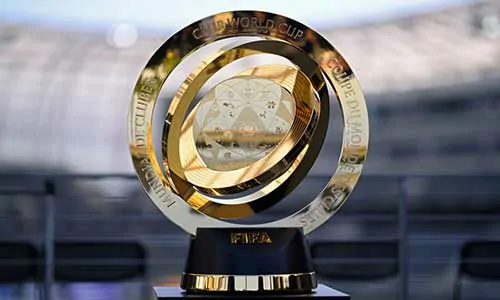
The global football landscape is preparing for one of the most significant structural shifts in modern sports history. With the introduction of a revamped, 32-team tournament, football enthusiasts and analytical experts alike are looking closely at how this changes the competitive landscape. Welcome to our FIFA Club World Cup 2025: Complete Review of the Expanded Tournament Format, where we dissect the tournament’s evolution, analyze the structural mechanics, examine the qualified teams, and evaluate the sporting and commercial implications of this massive expansion.
Table of Contents
- 1. Understanding the New Era of Global Club Football
- 2. Why Did FIFA Redesign the Format?
- 3. FIFA Club World Cup 2025: Complete Review of the Expanded Tournament Format & Mechanics
- 4. Confederation Slot Allocation & Qualification Criteria
- 5. Analysis of Qualified Teams and Contenders
- 6. Sporting Impact of the FIFA Club World Cup 2025: Complete Review of the Expanded Tournament Format
- 7. Host Cities, Venues, and Logistics in the United States
- 8. Player Welfare and Calendar Congestion Concerns
- 9. Commercial Opportunities, Broadcasting, and Prize Money
- 10. Conclusion & Final Thoughts
- 11. Frequently Asked Questions (FAQs)
1. Understanding the New Era of Global Club Football
For decades, the FIFA Club World Cup operated as an annual winter tournament, featuring the champions of FIFA’s six continental confederations alongside the host nation’s domestic champion. While this setup produced historical matchups, it often suffered from a lack of competitive balance. European clubs dominated the trophy cabinet, while the rest of the world struggled to bridge the massive financial and tactical gaps.
Consequently, FIFA made the landmark decision to restructure the tournament entirely. Starting in the summer of 2025, the tournament will transform into a quadrennial event featuring 32 of the best teams across the planet. This brings a tournament structure that mirrors the classic FIFA World Cup format for national teams, providing a true global stage where different footballing philosophies can clash over a month-long festival of sport.
2. Why Did FIFA Redesign the Format?
The primary motivation behind this drastic expansion is twofold: globalizing the commercial appeal of club football and raising the competitive standards of non-European regions. Currently, the UEFA Champions League is widely regarded as the pinnacle of club football. By creating a highly competitive, multi-continental tournament, FIFA hopes to challenge this eurocentric monopoly and elevate clubs from South America, North America, Africa, Asia, and Oceania.
Furthermore, the financial prospects are staggering. A tournament of this magnitude attracts elite sponsors, massive broadcasting bids, and global tourism. This revenue, according to FIFA, will be redistributed across the global football pyramid, helping clubs worldwide build better infrastructure, improve academies, and retain local talent longer. However, this vision is not without its critics, who argue that the football calendar is already dangerously saturated.
3. FIFA Club World Cup 2025: Complete Review of the Expanded Tournament Format & Mechanics
The structural layout of the new tournament is designed to be highly competitive, simple to follow, and dramatic. Moving away from the confusing play-off structures of past iterations, the 2025 edition will adopt a highly familiar tournament template that fans worldwide instantly recognize.
Let us look at a detailed breakdown of how the tournament matches will progress:
- The Group Stage: The 32 participating teams will be drawn into eight groups of four teams each. In this phase, teams will play in a round-robin format, meaning each team plays three matches. The top two teams from each group will advance to the knockout stage.
- No Third-Place Play-offs: Unlike the national team World Cup, there will be no third-place play-off match, keeping focus entirely on the primary competitive path.
- The Knockout Stage: From the round of 16 onward, the tournament shifts to a direct knockout format. If matches are tied at the end of normal regulation time, they will go to extra time and, if necessary, a penalty shootout to decide the winner.
This streamlined approach ensures that every single match in the group stage carries massive weight. For elite clubs, any slip-up could mean an early flight home, while underdog teams have a clear, structured path to pull off historic upsets on the world stage.
4. Confederation Slot Allocation & Qualification Criteria
To ensure true global representation while respecting the relative strength of various footballing regions, FIFA established a rigorous slot allocation system. Naturally, Europe (UEFA) and South America (CONMEBOL) receive the largest shares due to their historical dominance and high density of elite clubs.
The table below provides a clear breakdown of how the 32 qualification slots are distributed among the six continental confederations:
| Confederation | Region | Allocated Slots | Primary Qualification Path |
|---|---|---|---|
| UEFA | Europe | 12 | 4 Champions League winners + 8 via 4-year club ranking system |
| CONMEBOL | South America | 6 | 4 Copa Libertadores winners + 2 via 4-year club ranking system |
| AFC | Asia | 4 | 3 AFC Champions League winners + 1 via club ranking system |
| CAF | Africa | 4 | 3 CAF Champions League winners + 1 via club ranking system |
| CONCACAF | North & Central America | 4 | 4 Champions Cup winners |
| OFC | Oceania | 1 | Highest-ranked Champions League winner over the 4-year cycle |
| Host Nation | United States | 1 | Designated domestic slot awarded to MLS representative |
In addition to performance-based qualification via continental trophies, FIFA implemented a strict capping system. No more than two clubs from a single country can qualify, unless more than two clubs from that country win the premier continental trophy during the four-year cycle. This rule prevents any single domestic league from completely dominating the tournament field.
5. Analysis of Qualified Teams and Contenders
The qualification process has guaranteed an incredibly diverse field of participants. Representing Europe, football giants such as Real Madrid, Manchester City, Chelsea, Bayern Munich, and Paris Saint-Germain have secured their spots. These powerhouse clubs will enter the competition as heavy favorites, armed with world-class squads and deep tactical experience.
On the other side, South America boasts proud traditional clubs like Palmeiras, Flamengo, and Fluminense from Brazil, alongside legendary Argentinian giants River Plate and Boca Juniors. Historically, South American clubs play with immense passion and tactical fluidity, making them highly dangerous opponents in a tournament format.
Furthermore, teams like Al Hilal (Saudi Arabia), Urawa Red Diamonds (Japan), Al Ahly (Egypt), and Seattle Sounders (USA) bring highly competitive, tactically disciplined squads. These teams frequently dominate their local leagues and will view the 2025 tournament as their ultimate opportunity to prove they can match the absolute best of Europe on a level playing field.
6. Sporting Impact of the FIFA Club World Cup 2025: Complete Review of the Expanded Tournament Format
When assessing the competitive landscape, the sporting impact of this event cannot be overstated. Up until now, direct competitive matches between elite European teams and top clubs from Asia, South America, or Africa were incredibly rare, usually occurring only in pre-season friendlies. The structure of this expanded tournament changes everything by placing real, high-stakes sporting merit on every single encounter.
For non-European clubs, this tournament represents a pathway to global recognition. Facing tactical systems from different parts of the world will force managers to adapt in ways they rarely do in domestic leagues. Consequently, this exposure to diverse playing styles—from high-pressing European blocks to fast-breaking African transition play—will accelerate the tactical evolution of club football globally.
Additionally, the competitive pressure will be immense. Unlike friendly tours, players will be competing for a major official FIFA trophy. This competitive edge will naturally elevate intensity levels, promising fans highly entertaining, physical, and memorable tactical battles that will define the modern era of the sport.
7. Host Cities, Venues, and Logistics in the United States
The United States will host the inaugural 32-team tournament, serving as a massive dress rehearsal for the 2026 FIFA World Cup. Given the country’s world-class sporting infrastructure, modern stadium designs, and experience hosting major global events, it is uniquely positioned to handle the vast logistics of a 32-team tournament.
Matches are scheduled to take place across iconic, high-capacity stadiums, many of which are home to NFL franchises. Venues such as MetLife Stadium in New Jersey, Mercedes-Benz Stadium in Atlanta, and Hard Rock Stadium in Miami offer state-of-the-art facilities, excellent pitch conditions, and massive spectator capacities. This infrastructure ensures that players can perform at their physical peak while fans experience unmatched match-day comfort.
However, the geographical vastness of the United States presents clear logistical hurdles. Traveling across multiple time zones can induce physical fatigue, which means team training facilities, recovery protocols, and travel schedules must be meticulously planned to ensure sporting fairness and keep players healthy.
8. Player Welfare and Calendar Congestion Concerns
Despite the immense excitement surrounding the tournament, the expanded format has faced significant pushback from player unions and domestic leagues. Organizations like FIFPRO have raised serious concerns about the physical and mental demands placed on elite players. With domestic leagues, continental cups, international breaks, and now a month-long Club World Cup, top players could face seasons exceeding 70 matches.
This relentless schedule significantly increases the risk of muscular fatigue, long-term injuries, and psychological burnout. Critics argue that without mandatory, structured rest periods, the quality of the game itself will suffer. Consequently, managers will likely be forced to utilize deep squad rotation, relying heavily on academy players and reserve options to manage workloads.
In response to these worries, FIFA has emphasized that the tournament is scheduled during a slot historically reserved for the FIFA Confederations Cup, arguing that it fits logically into the international match calendar. Nevertheless, the debate over finding a sustainable balance between commercial expansion and player safety remains one of the most pressing challenges in modern football governance.
9. Commercial Opportunities, Broadcasting, and Prize Money
From a commercial perspective, the tournament is poised to be an unprecedented success. Media broadcasters are eager to secure multi-platform rights to broadcast matchups that have never occurred in official competitions before. The commercial appeal of seeing a club like Real Madrid face off against Boca Juniors or Al Ahly in a high-stakes competitive match is highly attractive to global sponsors.
According to various media reports, the projected revenue from broadcasting, ticket sales, and corporate sponsorships will allow FIFA to offer substantial prize money. Each participating club is expected to receive a significant participation fee, with additional performance-based bonuses as they advance through the tournament phases.
For clubs outside of Europe’s wealthy elite, this financial windfall can be transformative. It provides the capital needed to upgrade scouting networks, invest in advanced sports science, and build world-class training facilities. Over time, this redistribution of wealth could play a vital role in balancing global football competitiveness.
10. Conclusion & Final Thoughts
The upcoming tournament represents a bold, historic step in the evolution of global sports. While concerns regarding player welfare and calendar congestion are entirely valid and must be addressed with careful scheduling, the sporting and cultural promise of this event remains incredibly high.
By gathering 32 of the best clubs from every corner of the globe into a single, high-stakes tournament, FIFA is creating a platform where new footballing stories will be written. Fans can look forward to seeing legendary tactical matchups, historic under-dog runs, and the crowning of a true champion of the world.
What are your thoughts on this new format? Do you believe a non-European club can shock the world and lift the trophy? Share your thoughts with us in the comments below, or check out the official FIFA Website or detailed analytical reports on Sky Sports to stay updated with the latest team news and qualification updates.
11. Frequently Asked Questions (FAQs)
Q1: How many teams will play in the FIFA Club World Cup 2025?
A: The tournament will feature exactly 32 teams representing all six continental football confederations, moving away from the previous 7-team annual format.
Q2: Where and when will the 2025 tournament take place?
A: The tournament will be hosted in the United States, scheduled to take place in the summer of 2025, serving as a key event ahead of the 2026 FIFA World Cup.
Q3: How often will this new tournament be held?
A: The expanded 32-team tournament will be held once every four years, similar to the national team FIFA World Cup, rather than being an annual event.
Q4: Why are some player associations criticizing the new format?
A: Player unions, including FIFPRO, have raised concerns over extreme calendar congestion, player fatigue, and the lack of recovery time between grueling domestic campaigns and international tournaments.
Q5: How do teams qualify for the tournament?
A: Teams qualify by winning their respective premier continental club competitions (such as the UEFA Champions League or Copa Libertadores) during the four-year cycle, or through their confederation’s four-year club ranking performance.
Q6: Is there a limit to how many clubs from one country can participate?
A: Yes, there is a strict limit of two clubs per nation, unless more than two clubs from the same country win their continental champion title during the four-year qualification period.