FIFA World Cup Host Selection Process: Evolution Through the Years
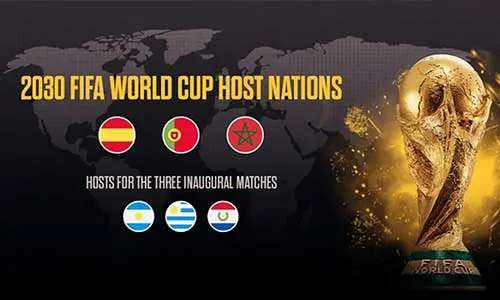
Table of Contents
- 1. Introduction
- 2. The Early Eras of the FIFA World Cup Host Selection Process
- 3. The Continental Rotation and Congress Era
- 4. The Executive Committee Era and Centralized Power
- 5. Why the Selection Process Demanded Modern Reform
- 6. The Modern Bidding System: Transparency and Human Rights
- 7. The Future of Host Selection (2030 and Beyond)
- 8. Frequently Asked Questions
- 9. Conclusion
1. Introduction
The FIFA World Cup stands as the pinnacle of international football, drawing billions of viewers and generating immense cultural and economic impact. Hosting this prestigious tournament is a highly sought-after privilege, one that can transform a nation’s sporting infrastructure and global profile. However, the path to securing these hosting rights has undergone radical transformations since the tournament’s inception in 1930.
Analyzing the FIFA World Cup host selection process: evolution through the years reveals a journey marked by shifting power dynamics, geopolitical interests, and structural reforms. What began as a relatively simple agreement among a handful of football administrators has developed into a highly complex, multi-billion-dollar global bidding campaign. Consequently, understanding this evolution provides key insights into how international sports governance adapts to modern demands of transparency, commercialization, and human rights.
2. The Early Eras of the FIFA World Cup Host Selection Process: Evolution Through the Years
In the early days of international football, the selection of host countries was far from systematic. To begin with, travel constraints and political alliances heavily influenced decision-making. FIFA, founded in 1904, had to navigate a world where intercontinental travel was slow, expensive, and logistically challenging.
For the inaugural tournament in 1930, Uruguay was selected as the host nation during a FIFA Congress meeting in Barcelona. Uruguay was chosen primarily because the country agreed to cover all travel and accommodation costs for participating teams. In addition, the country was celebrating the centenary of its constitution and boasted a dominant national team, having won the Olympic gold medals in 1924 and 1928.
However, this decision caused significant friction. Many European nations boycotted the tournament due to the long and arduous sea voyage across the Atlantic. Only four European teams eventually made the journey, showcasing the immense logistical barriers of the era.
The subsequent tournaments in 1934 and 1938 were held in Italy and France, respectively. These selections were made through relatively informal voting processes within the FIFA Congress. The decision to hold consecutive tournaments in Europe angered South American nations, who believed the event should alternate between the two dominant footballing continents. As a result, Argentina boycotted the 1938 tournament in France, illustrating how the early FIFA World Cup host selection process: evolution through the years was highly susceptible to continental rivalries.
3. How the FIFA World Cup Host Selection Process: Evolution Through the Years Shaped Regional Rotation
Following the devastation of World War II, FIFA recognized the need for a more structured approach to ensure global participation. To prevent future boycotts and maintain harmony between Europe and the Americas, an informal rotation agreement was established. Under this system, hosting duties alternated between Europe and the Americas for several decades.
The 1950 World Cup was awarded to Brazil, the only country that submitted a formal bid, as Europe was still recovering from the war. Over the next few decades, the selection process relied on a combination of congressional voting and strategic compromises. For instance, the 1962 tournament was awarded to Chile to help rebuild the nation’s footballing infrastructure after a devastating earthquake, highlighting how social factors began to influence decisions.
The table below highlights the key hosts and selection methods during this era of rotation:
| Year | Host Nation | Selection Method | Key Context |
|---|---|---|---|
| 1950 | Brazil | Uncontested | Europe was rebuilding post-WWII. |
| 1954 | Switzerland | Uncontested | Marked FIFA’s 50th anniversary. |
| 1962 | Chile | Congress Vote | Defeated Argentina in a direct vote. |
| 1970 | Mexico | Congress Vote | First tournament held in North America. |
As the tournament grew in commercial value, the informal rotation policy faced challenges. Developing nations in Asia and Africa began demanding representation, arguing that the World Cup should truly represent the entire globe. Consequently, the FIFA World Cup host selection process: evolution through the years had to expand its horizons beyond its traditional Euro-South American axis.
4. The Executive Committee Era and the FIFA World Cup Host Selection Process: Evolution Through the Years
By the late 20th century, the selection process underwent a significant structural shift. Instead of the entire FIFA Congress voting on host nations, the responsibility was delegated to the powerful FIFA Executive Committee (ExCo). This relatively small group of football administrators held immense influence over where the tournament would be played.
While this change was designed to streamline the bidding process, it centralizing decision-making authority. During this period, commercialization and broadcasting rights became dominant factors in evaluating bids. FIFA began to demand extensive guarantees from host governments regarding tax exemptions, infrastructure construction, and security.
Furthermore, the ExCo era saw the introduction of several historic firsts. In 1996, the committee awarded the 2002 World Cup jointly to South Korea and Japan. This was the first co-hosted tournament in World Cup history, aimed at expanding the game’s footprint in Asia. Although the joint bid presented unique logistical hurdles, it proved to be a major commercial success.
In 2004, the ExCo selected South Africa to host the 2010 World Cup. This decision marked the first time an African nation would host the tournament, fulfilling a long-standing promise by FIFA President Sepp Blatter to bring the event to the African continent. Meanwhile, the process was becoming increasingly scrutinized by external observers, setting the stage for major changes.
The pinnacle of the ExCo system occurred in December 2010, when the committee voted on the hosts for both the 2018 and 2022 tournaments simultaneously. The selection of Russia for 2018 and Qatar for 2022 generated unprecedented international debate. The double award exposed structural vulnerabilities within the decision-making framework, leading to widespread calls for reform from fans, sponsors, and governments alike.
Why the FIFA World Cup Host Selection Process: Evolution Through the Years Demanded Modern Reform
The intense scrutiny surrounding the 2010 double vote served as a turning point for sports governance. Critics argued that allowing a small group of 22 ExCo members to decide the hosts of the world’s largest sporting event invited excessive lobbying and geopolitical pressure. Several members of the committee were subsequently suspended or removed following independent investigations into governance practices.
Consequently, the need for a more transparent, objective, and democratic system became undeniable. Major corporate sponsors expressed concern over reputational risks, while human rights organizations demanded that future hosts adhere to international labor standards. Ultimately, this pressure forced FIFA to completely overhaul how it awarded its flagship tournament.
5. The Modern Bidding System: Transparency and Human Rights
In response to these challenges, FIFA introduced a series of landmark reforms designed to restore credibility to the bidding process. The most significant structural change was the dismantling of the ExCo’s exclusive voting rights. Under the new guidelines, the power to select host nations was returned to the full FIFA Congress, consisting of over 200 member associations.
Furthermore, the modern FIFA World Cup host selection process: evolution through the years transitioned to a fully public voting model. In this transparent system, the ballots cast by every member association are published online shortly after the vote concludes, ensuring accountability.
In addition to voting reforms, FIFA established a much more rigorous technical evaluation phase. Bidding nations are now subjected to detailed inspections by independent panels. These panels assess several critical criteria, including:
- Existing Infrastructure: Evaluating stadium capacities, training facilities, and transport networks.
- Financial Viability: Analyzing projected revenues, ticketing, and government financial guarantees.
- Human Rights Commitments: Assessing labor standards, freedom of movement, and environmental sustainability.
This modernized process was first implemented for the 2026 World Cup bidding cycle. The joint “United” bid of Canada, Mexico, and the United States competed against Morocco. Following detailed evaluation reports that highlighted the technical advantages of the North American bid, the FIFA Congress voted overwhelmingly in 2018 to award the tournament to the United Bid, demonstrating the effectiveness of the reformed system.
6. The Future of the FIFA World Cup Host Selection Process: Evolution Through the Years
As the tournament expands to a 48-team format, the logistical and financial demands on host nations have grown exponentially. Consequently, single-nation bids are becoming increasingly rare, with multi-nation joint bids emerging as the new standard for hosting.
This trend is highly visible in the selection for the 2030 World Cup. To celebrate the centenary of the tournament, FIFA announced a unique multi-continental proposal. Spain, Portugal, and Morocco will serve as the primary host nations, while Uruguay, Argentina, and Paraguay will host the opening three matches to commemorate the 1930 tournament in Montevideo.
Meanwhile, the bidding process for the 2034 World Cup saw a highly streamlined approach, with Saudi Arabia emerging as the sole bidder under FIFA’s updated strategic guidelines. This reflects how the FIFA World Cup host selection process: evolution through the years continues to adapt to changing geopolitical landscapes and the massive scale of modern sporting infrastructure requirements.
To gain a broader historical perspective on previous tournaments and their respective structures, readers can explore the comprehensive database of FIFA World Cup hosts on Wikipedia.
7. Frequently Asked Questions
Q1: How did the FIFA World Cup host selection process change after the 2015 reforms?
Following the 2015 reforms, the voting power was shifted away from the small Executive Committee (ExCo) to the entire FIFA Congress, where every member association has one vote. Additionally, all votes are now made public, and bids are subjected to strict independent technical and human rights evaluations.
Q2: What is the significance of the 1930 World Cup host selection?
The 1930 host selection of Uruguay was based on the nation’s willingness to cover all travel costs for participating teams. However, the long sea voyage caused most European teams to boycott, showing the severe logistical challenges of early international sports events.
Q3: Why did FIFA use a continental rotation policy?
FIFA used an informal continental rotation policy to ensure fairness and prevent boycotts from South American and European nations, who dominated the early eras of football. The policy sought to alternate the tournament hosting duties between the two regions.
Q4: When was the first joint bid accepted for a World Cup?
The first joint bid was accepted for the 2002 World Cup, which was hosted by South Korea and Japan. Despite initial resistance from FIFA, the tournament was highly successful in expanding football’s reach in Asia.
Q5: How are human rights evaluated in the modern selection process?
In the modern process, bidding nations must submit detailed human rights strategies, which are independently assessed. This includes commitments to protect labor rights during construction, ensure freedom of expression, and uphold environmental sustainability standards.
Q6: Why is the 2030 World Cup being hosted across three continents?
The 2030 tournament will celebrate the centenary of the World Cup. To honor its history, the opening centenary matches will take place in South America (Uruguay, Argentina, Paraguay), while the main tournament will be hosted jointly by Morocco, Portugal, and Spain.
8. Conclusion
The FIFA World Cup host selection process: evolution through the years reflects the broader development of global football. From informal congressional votes in the early 20th century to highly standardized, multi-criteria bidding procedures today, the system has continually adapted to changes in technology, geopolitics, and public expectations.
While challenges remain, the shift toward public voting, multi-nation hosting, and mandatory independent evaluations marks a positive step toward ensuring transparency and sustainability. As the tournament continues to grow, the selection process will likely remain a dynamic reflection of global sports governance and cooperation.
What do you think? Do you prefer the new trend of multi-country hosting, or should the World Cup return to single-nation hosts? Let us know your thoughts in the comments below!