FIFA World Cup Trophy History: Who Owns and Keeps the Original Cup?
Every four years, the world stops to witness the greatest sporting spectacle on Earth. While players run themselves to exhaustion on the pitch, they are all chasing a single golden dream. However, few football fans know the dramatic and mysterious stories hidden behind this legendary prize. Indeed, diving into the FIFA World Cup Trophy History: Who Owns and Keeps the Original Cup? reveals a thrilling saga filled with international heist attempts, strict global regulations, and absolute secrecy. Let us explore the fascinating journey of football’s ultimate treasure, tracing how it evolved from a modest silver-gilt statuette into the most recognized sports icon in the world.
Table of Contents
- The Evolution of Football’s Ultimate Prize
- FIFA World Cup Trophy History: Who Owns and Keeps the Original Cup?
- The Astonishing Tales of the Jules Rimet Trophy
- FIFA World Cup Trophy History: Who Owns and Keeps the Original Cup? Regulations
- FIFA World Cup Trophy History: Who Owns and Keeps the Original Cup? Value and Materials
- Comparing the Two Iconic World Cup Trophies
- The High-Security World of the Original Trophy
- Conclusion: The Eternal Charm of the Golden Cup
The Evolution of Football’s Ultimate Prize
To fully grasp the magic of the tournament, one must understand that there have actually been two distinct trophies used throughout the tournament’s history. The first prize, originally named “Victory,” was later renamed the Jules Rimet Trophy in honor of the third FIFA President, who was instrumental in creating the World Cup. Designed by French sculptor Abel Lafleur, it featured a gold-plated sterling silver depiction of Nike, the ancient Greek goddess of victory, holding an octagonal cup aloft.
Furthermore, this original trophy had a distinct destiny. Under the early tournament guidelines, any nation that won the World Cup three times would earn the right to keep the trophy permanently. Consequently, when Brazil secured their third title in 1970, the Jules Rimet Trophy was permanently awarded to the Brazilian Football Confederation. This monumental event forced FIFA to commission a brand-new design for the 1974 tournament, setting the stage for the modern era.
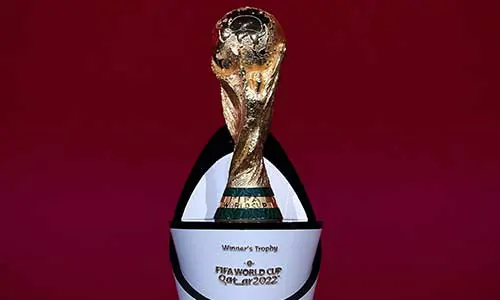
The second, and current, trophy is officially known as the FIFA World Cup Trophy. Introduced in 1974, it was created by the renowned Italian sculptor Silvio Gazzaniga. His design departed significantly from the winged goddess style, opting instead for a dynamic, modern depiction of two human figures rising up to support the Earth. This beautifully symbolizes the global unity, energy, and triumph inherent in the sport of football.
In contrast to the older model, the modern trophy is designed to be timeless. Rather than allowing a three-time champion to keep it forever, FIFA changed the rules to ensure that the physical masterpiece remains in their possession. As we look closely at the modern landscape, understanding the FIFA World Cup Trophy History: Who Owns and Keeps the Original Cup? helps clarify why this prize remains so elusive and highly guarded.
FIFA World Cup Trophy History: Who Owns and Keeps the Original Cup?
When a national team triumphs in the final match, the players celebrate wildly, lifting the gleaming golden icon under a shower of confetti. However, this moment of physical contact is remarkably brief. Many fans wonder who officially owns this multi-million dollar masterpiece and where it resides during the four years between tournaments.
To put it simply, FIFA retains absolute legal ownership of the original FIFA World Cup Trophy. The physical cup never becomes the property of any winning nation, regardless of how many times they win the tournament. In addition, the original solid gold trophy is only present during the official pitch presentation on the night of the final match. Almost immediately after the ceremony concludes, the original is escorted away by specialized security officers.
What do the champions actually take home? Instead of keeping the original solid gold masterpiece, the winning association is presented with a high-quality replica. This replica, officially known as the FIFA World Cup Winner’s Trophy, is meticulously crafted. While it looks virtually identical to the original, it is made of gold-plated bronze rather than solid gold. This practice ensures that the ultimate symbol of victory remains safe, while still giving the champions a physical token of their historic achievement to display in their home country.
The Astonishing Tales of the Jules Rimet Trophy
The story of the original World Cup prize is stranger than fiction. During its four-decade lifespan, the Jules Rimet Trophy was subjected to extreme danger, war, and sophisticated criminal plots. Its survival during World War II is a legendary tale of quick thinking. Fearing that occupying forces might confiscate the gold, Dr. Ottorino Barassi, an Italian sports official, secretly removed the trophy from a bank vault in Rome. He hid it under his own bed in a simple shoebox for several years, successfully keeping it out of harm’s way.
However, the trophy’s luck took a dramatic turn in 1966. Just months before the World Cup was set to kick off in England, the Jules Rimet Trophy was stolen from a public exhibition at Westminster Central Hall. The theft triggered a massive Scotland Yard investigation and left the host nation deeply embarrassed. Surprisingly, the hero of the story was a mixed-breed dog named Pickles. While walking with his owner in South London, Pickles sniffed out a package wrapped in newspaper tucked under a garden hedge—it was the missing trophy, completely unharmed.
Unfortunately, the final chapter of the Jules Rimet Trophy’s journey is a tragic one. In 1983, thirteen years after Brazil had won the right to keep the trophy permanently, it was stolen from a display case at the Brazilian Football Confederation headquarters in Rio de Janeiro. Despite an extensive police search, the original trophy was never seen again. Most historians and authorities believe that the thieves melted down the historic gold-plated sterling silver artifact to sell its raw materials, leaving a permanent void in football history.
FIFA World Cup Trophy History: Who Owns and Keeps the Original Cup? Regulations
In response to the tragic loss of the Jules Rimet Trophy, FIFA instituted incredibly strict protocols regarding the modern trophy. These rules are designed to prevent theft, damage, or unauthorized handling. According to official FIFA protocol, only a highly exclusive group of people are permitted to touch the original solid-gold trophy with their bare hands. This group is strictly limited to winning players, coaching staff during the official post-match ceremony, and reigning heads of state.
Furthermore, these regulations extend to how the trophy travels. When the trophy is not on official display, it resides in a secure, climate-controlled vault at the FIFA Museum in Zurich, Switzerland. The museum is a popular destination for football tourists, allowing fans from around the world to view the piece behind thick, bulletproof glass. Whenever the trophy leaves Zurich, it travels inside a custom-designed, secure case created by luxury fashion house Louis Vuitton.
These security measures are not merely for show. Given the immense symbolic and monetary value of the object, any public appearance is treated with the same level of security as a presidential visit. Consequently, when we analyze the FIFA World Cup Trophy History: Who Owns and Keeps the Original Cup? Regulations, it becomes clear that FIFA leaves absolutely nothing to chance. The days of storing football’s greatest treasure in a shoebox under a bed are long gone.
FIFA World Cup Trophy History: Who Owns and Keeps the Original Cup? Value and Materials
To truly appreciate the grandeur of this sports icon, one must look closely at its physical characteristics and composition. The modern trophy stands at 36.8 centimeters (14.5 inches) tall and weighs approximately 6.175 kilograms (13.61 pounds). It is made of 5 kilograms (11 pounds) of solid 18-karat (75%) gold. This composition means that the trophy is actually hollow inside; if it were solid gold all the way through, it would be far too heavy for winning captains to lift comfortably over their heads.
In addition to its gold structure, the base of the trophy features two circular bands of rich, green malachite. This beautiful semi-precious stone adds a brilliant contrast to the gleaming gold and represents the vibrant green fields where the beautiful game is played. The bottom of the trophy is engraved with the names of every winning nation since 1974. Because space on the base is limited, experts estimate that there will only be room to engrave winners until the 2038 World Cup, after which FIFA will likely modify the base to accommodate future champions.
While the material value of the gold and malachite is estimated to be around $250,000 USD, its historical and cultural value is immeasurable. Experts estimate its true market value to be upwards of $20 million USD, making it by far the most expensive trophy in global sports. Analyzing the FIFA World Cup Trophy History: Who Owns and Keeps the Original Cup? Value and Materials highlights why this object is guarded with such extreme care, as it represents both an artistic masterpiece and an unparalleled financial asset.
Comparing the Two Iconic World Cup Trophies
To better understand how the physical representation of football supremacy has changed, let us compare the specifications of the historic Jules Rimet Trophy and the modern FIFA World Cup Trophy.
| Feature | Jules Rimet Trophy (1930 – 1970) | Modern FIFA World Cup Trophy (1974 – Present) |
|---|---|---|
| Designer | Abel Lafleur (France) | Silvio Gazzaniga (Italy) |
| Material | Gold-plated sterling silver on lapis lazuli base | Solid 18-karat gold with malachite bands |
| Weight | 3.8 kilograms (8.4 lbs) | 6.175 kilograms (13.6 lbs) |
| Height | 35 centimeters (13.7 inches) | 36.8 centimeters (14.5 inches) |
| Ownership Rule | Three-time winners keep it permanently | Remains permanent property of FIFA |
| Current Status | Stolen in 1983; widely believed destroyed | Safely kept at the FIFA Museum in Zurich |
The High-Security World of the Original Trophy
The journey of the FIFA World Cup Trophy is not limited to the host nation and the museum in Zurich. Every four years, before the tournament begins, the trophy embarks on a massive global tour. Sponsored by major partners, the FIFA World Cup Trophy Tour brings the golden prize to dozens of countries, allowing thousands of passionate fans to see it in person. However, managing the logistics and security of this tour is a monumental task.
During the tour, the trophy travels in a private, branded aircraft equipped with state-of-the-art security systems. It is accompanied at all times by a dedicated team of security personnel, including local law enforcement officers in every host city. Furthermore, the public is never allowed to come within touching distance of the trophy; it is typically displayed behind reinforced security glass with motion-detection lasers.
When the tournament final arrives, the trophy is transported under armed escort to the stadium. It sits on the sidelines, gleaming under the stadium lights, serving as a silent, powerful motivator for the twenty-two players on the field. Once the final whistle blows, the original is polished, brought out for the ceremony, and then swiftly returned to its secure storage. This meticulous process ensures that the integrity of the original trophy remains preserved for generations to come.
Conclusion: The Eternal Charm of the Golden Cup
Ultimately, the FIFA World Cup is more than just a tournament; it is a global celebration of passion, drama, and athletic excellence. The trophy itself is the physical manifestation of this magic. From its humble beginnings as the Jules Rimet Trophy to the stunning Gazzaniga masterpiece we know today, the story of this prize is deeply intertwined with the history of the 20th and 21st centuries.
While winning players get to lift the genuine solid gold piece for only a fleeting moment, and FIFA remains the permanent owner of the original, the dream of winning it remains undiminished. The replica trophies held by victorious nations around the globe serve as proud symbols of national triumph, while the original remains safe in Zurich, waiting to inspire the next generation of football legends.
If you want to read more about official football histories and regulations, you can check out the Official FIFA Website, or explore the deep cultural history of the sport on Encyclopedia Britannica.
What is your favorite memory in World Cup history? Do you think the current design is superior to the old Jules Rimet Trophy? Let us know your thoughts in the comments below, and don’t forget to share this article with your fellow football fans!
Frequently Asked Questions
Is the original World Cup trophy made of solid gold?
Yes, the original FIFA World Cup Trophy is made of 18-karat solid gold. It weighs 6.175 kilograms, but because it is hollow on the inside, it remains light enough for players to lift over their heads.
Do World Cup winners get to keep the actual trophy?
No, they do not. The original trophy remains the permanent property of FIFA and is returned to their museum in Switzerland immediately after the final ceremony. The winning country receives a gold-plated bronze replica to display permanently.
What happened to the first World Cup trophy?
The first trophy, the Jules Rimet Trophy, was permanently awarded to Brazil in 1970. Sadly, it was stolen from their headquarters in Rio de Janeiro in 1983 and is widely believed to have been melted down by the thieves.
Who is allowed to touch the original FIFA World Cup Trophy?
Under strict FIFA guidelines, only a very selective group of individuals are permitted to touch the original trophy with bare hands. This group includes former and current World Cup winners, as well as reigning heads of state.
How much is the original World Cup trophy worth today?
While the raw gold and malachite materials are worth around $250,000 USD, the historical and cultural significance of the trophy makes its estimated market value close to $20 million USD.