Football Formations Guide: From 4-4-2 to Today’s Tactical Systems
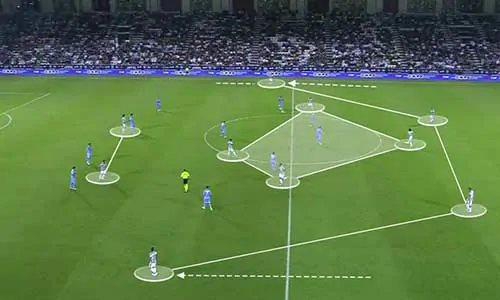
Table of Contents
- 1. Introduction to Modern Football Tactics
- 2. The Evolution: Football Formations Guide: From 4-4-2 to Today’s Tactical Systems
- 3. The Classic 4-4-2: The Foundation of Modern Structure
- 4. The Tactical Transition: Why Managers Shifted to the 4-3-3
- 5. The Resurgence of the Three-Back System (3-5-2 and 3-4-3)
- 6. Modern Hybrid Systems and Positional Play (Juego de Posición)
- 7. Comparative Analysis of Primary Tactical Formations
- 8. Practical Application: How to Choose the Right Tactical System
- 9. Frequently Asked Questions (FAQ)
- 10. Conclusion and Future Trends
1. Introduction to Modern Football Tactics
Football is a constantly evolving sport where tactical dominance often determines the outcome of championships. Over the decades, managers have continuously sought innovative ways to control space, exploit opponent weaknesses, and protect their own goals. To understand how contemporary matches are played, fans and analysts alike require a comprehensive Football Formations Guide: From 4-4-2 to Today’s Tactical Systems to navigate these complex shifts.
Historically, teams relied on rigid structures with defined roles. However, the modern game demands extreme fluidity, where formations change seamlessly depending on whether a team is in or out of possession. Consequently, understanding these frameworks is essential for anyone looking to analyze the game at a deeper level.
In this guide, we will explore the historical significance of traditional setups and analyze how they paved the way for the sophisticated, hybrid systems observed in elite leagues today.
2. The Evolution: Football Formations Guide: From 4-4-2 to Today’s Tactical Systems
To appreciate modern tactical structures, we must first trace their lineage. The journey from the early WM formation of the mid-20th century to modern fluid shapes reveals a steady transition toward midfield control and numerical superiority. This historical context is vital for understanding why specific systems rose to prominence while others faded into obscurity.
For many years, simplicity and balance were the guiding principles of tactical setups. Nevertheless, as physical fitness improved and analytical tools became more sophisticated, managers realized that static formations were easily countered. Therefore, the focus shifted from maintaining a rigid shape to controlling specific zones on the pitch.
As we delve deeper into this Football Formations Guide: From 4-4-2 to Today’s Tactical Systems, we observe that the primary driver of tactical evolution has always been the quest to create space in attack and restrict it in defense.
Why Managers Rely on This Football Formations Guide: From 4-4-2 to Today’s Tactical Systems
Modern coaching is no longer about putting eleven players in fixed positions. Instead, coaches utilize structured frameworks as reference points. By analyzing the principles outlined in this guide, managers can implement strategic variations that allow players to rotate while keeping the team defensively secure.
3. The Classic 4-4-2: The Foundation of Modern Structure
For over two decades, the flat 4-4-2 was the undisputed king of football formations. Offering a balanced distribution of players across the pitch, it provided clear defensive lines and straightforward attacking routes. This system relies on two banks of four players, supported by two central strikers working in tandem.
In defense, the 4-4-2 is exceptionally compact. The two defensive lines sit close together, minimizing the space between the midfield and defensive units. Additionally, the wide midfielders are expected to track back and assist their fullbacks, creating defensive stability on the flanks.
Offensively, the formation traditionally relies on a classic partnership upfront: a “target man” who wins aerial duels and holds up the ball, paired with a faster “poacher” who exploits space behind the defensive line. For a detailed breakdown of traditional roles, you can explore the technical analyses provided by The Coaches’ Voice, which offers professional insights into historic systems.
The Strengths of the 4-4-2 System
- Symmetry and Balance: Every player has a clear zone of responsibility, reducing defensive confusion.
- Strong Wing Play: The combination of fullbacks and wide midfielders allows for consistent overlapping runs and crossing opportunities.
- Effective Pressing: The two strikers can initiate a coordinated press against opponent center-backs.
The Weaknesses and Vulnerabilities
- Midfield Underload: Against teams playing a three-man midfield (such as a 4-3-3), the two central midfielders in a 4-4-2 can easily be outnumbered and bypassed.
- Predictability: Because players operate primarily in straight lines, defense-splitting passes can be difficult to generate against compact opponents.
- Lack of Vertical Depth: The gap between the midfield and forward lines can sometimes widen, leaving the strikers isolated.
4. The Tactical Transition: Why Managers Shifted to the 4-3-3
As opponents learned to exploit the midfield gap in the 4-4-2, innovative tacticians began looking for ways to dominate the center of the pitch. This quest led to the widespread adoption of the 4-3-3 formation. By sacrificing one striker for an extra midfielder, managers created a central trio that could easily retain possession through triangular passing networks.
The 4-3-3 relies heavily on a specialized defensive midfielder (often referred to as the “regista” or “anchor”). This player sits in front of the defense, breaking up opposition plays and initiating attacks. Consequently, the other two central midfielders are freed to push forward into half-spaces, supporting the front three.
In attack, the traditional wingers of the 4-4-2 were replaced by inverted forwards. These players cut inside onto their stronger feet to shoot, while overlapping fullbacks provide the necessary width. This dynamic creates a highly fluid attacking front that is difficult for opposition backlines to track.
Key Tactical Components of the Modern 4-3-3
- Triangulation: The positioning of the players naturally creates passing triangles, making it easier to bypass defensive blocks.
- The False Nine: Instead of staying high up the pitch, the central striker drops deep into midfield, dragging central defenders out of position and creating space for inverted wingers.
- High Pressing: With three forwards positioned high up the pitch, teams can press the opponent’s build-up play immediately upon losing possession.
5. The Resurgence of the Three-Back System (3-5-2 and 3-4-3)
Tactical history is cyclical. As the 4-3-3 became the global standard, coaches looked for counter-strategies, sparking a major resurgence of three-back formations. Systems like the 3-5-2 and 3-4-3 offer an alternative method for achieving numerical superiority in midfield while maintaining defensive solidity.
The key to any successful three-back system lies in the wingbacks. These players must possess exceptional physical endurance, as they are responsible for patrolling the entire length of the pitch. When defending, they drop back to form a back five; when attacking, they push forward to act as traditional wingers.
Furthermore, having three central defenders provides a strong foundation against two-striker systems. It also allows one defender to step out of the backline with the ball, acting as an extra playmaker during build-up phases.
Understanding the 3-5-2 Structure
The 3-5-2 utilizes a dense midfield unit of five players, typically consisting of two wingbacks, two box-to-box midfielders, and a deep-lying playmaker. This setup ensures that the team rarely gets outnumbered in central areas, making it an excellent counter-attacking platform.
Analyzing the 3-4-3 Variation
In contrast, the 3-4-3 prioritizes attacking width and high pressing. With three dedicated forwards and two wide wingbacks, teams can easily pin the opponent’s defense deep into their own half. However, this system requires highly disciplined central midfielders who can cover large distances to prevent counter-attacks.
6. Modern Hybrid Systems and Positional Play (Juego de Posición)
Today, elite coaches rarely limit their teams to a single, static formation. Instead, they employ hybrid tactical systems that shift depending on the phase of play. For example, a team might defend in a compact 4-4-2 shape but transition into a fluid 3-2-4-1 when in possession of the ball.
This approach is heavily rooted in the philosophy of “Juego de Posición” (Positional Play). The pitch is divided into a grid, and players must occupy specific zones to create passing lanes and numerical advantages. A prominent example is the tactical evolution developed by elite European coaches, whose strategies are regularly detailed on the official FIFA Training Centre.
A key feature of modern hybrid setups is the use of inverted fullbacks. Instead of staying wide, one fullback moves into central midfield during build-up play. This movement creates a box midfield, providing maximum passing options and securing the team against central counter-attacks.
Practical Application of the Football Formations Guide: From 4-4-2 to Today’s Tactical Systems
To implement these hybrid concepts, coaches must focus on tactical flexibility. Players are no longer defined strictly by their starting positions. Instead, they are taught to identify space and rotate dynamically, ensuring the team maintaining its structure even during rapid transitions.
7. Comparative Analysis of Primary Tactical Formations
To help visualize how these formations contrast with one another, the table below outlines the primary characteristics, strengths, and ideal tactical styles associated with each major system.
| Formation | Core Philosophy | Primary Strength | Main Weakness |
|---|---|---|---|
| 4-4-2 (Flat) | Defensive balance & wide play | Excellent defensive structure | Easily outnumbered in midfield |
| 4-3-3 | Possession & high pressing | Strong passing triangles | Vulnerable to fast counters |
| 3-5-2 | Central density & control | Numerical superiority in midfield | High physical demand on wingbacks |
| 3-2-4-1 (Hybrid) | Positional dominance & build-up | Maximum passing options | Requires highly specialized profiles |
8. Practical Application: How to Choose the Right Tactical System
Selecting a formation is not just about choosing a preferred layout; it requires a realistic assessment of the available squad. A manager must evaluate the technical, physical, and tactical capabilities of their players before committing to a specific system.
For instance, attempting to play a high-pressing 4-3-3 with slow central defenders is highly risky, as it leaves too much open space behind the defensive line. Similarly, playing a 3-5-2 without energetic, disciplined wingbacks can leave the flanks entirely exposed to opponent attacks.
Therefore, successful coaches analyze the squad’s strengths first, then tailor the tactical system to unlock those players’ maximum potential.
9. Frequently Asked Questions (FAQ)
What is the most successful formation in modern football?
There is no single “best” formation. However, the 4-3-3 and various hybrid shapes like the 3-2-4-1 are currently favored by elite clubs due to their flexibility, possession retention capabilities, and strong pressing angles.
How does an inverted fullback affect a team’s formation?
An inverted fullback drifts into central midfield during possession. This creates a temporary numerical advantage in the center of the pitch, helps control counter-attacks, and frees up attacking midfielders to push higher up.
Why has the flat 4-4-2 lost popularity in elite leagues?
The flat 4-4-2 has struggled against modern three-man midfields, which can easily outnumber and bypass a two-man midfield pairing. However, it remains a highly effective structure for organizing defensive blocks.
What is the role of a “False Nine” in a 4-3-3?
A False Nine is a striker who drops deep into midfield rather than staying on the last defender. This movement drags opposing center-backs out of position, creating space for wide forwards to run into.
What physical attributes do wingbacks require in a 3-5-2?
Wingbacks require exceptional stamina, acceleration, and tactical awareness, as they are responsible for covering the entire flank in both defensive and attacking phases.
10. Conclusion and Future Trends
In summary, the journey of football tactics shows a clear trend: static formations are yielding to fluid, principle-driven play. While the structures outlined in this Football Formations Guide: From 4-4-2 to Today’s Tactical Systems provide a useful foundation, modern matches are defined by how players adapt to dynamic space during transitions.
As sports science, data analytics, and player versatility continue to improve, we will likely observe even more fluid positional rotations. The boundaries between defensive and attacking phases will continue to blur, making the game even faster and more unpredictable.
What is your favorite tactical system? Do you prefer the defensive resilience of a compact 4-4-2 or the fluid attacking play of a modern hybrid shape? Share your thoughts in the comments below, and explore our other tactical analyses to deepen your understanding of the beautiful game.