Football Position Numbers Explained: The Meaning of 1 to 11
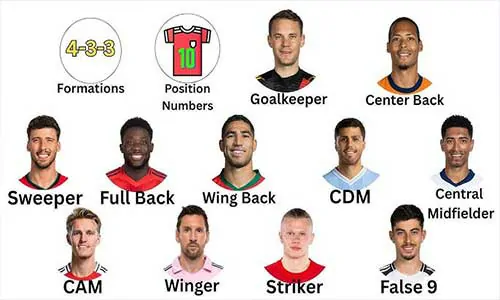
In the world of football, shirt numbers are far more than arbitrary labels chosen by players. Instead, they represent a rich tapestry of history, tactical roles, and cultural identities on the pitch. Whether you are a casual fan trying to understand the lineup or an aspiring analyst studying tactics, having Football Position Numbers Explained: The Meaning of 1 to 11 is crucial to unlocking a deeper appreciation of the beautiful game.
Historically, numbers were assigned strictly to help referees and spectators identify players based on their locations on the field. While modern squad numbers now range from 1 to 99, the classic 1 to 11 system remains the foundational blueprint for tactical formations. In this comprehensive guide, we will break down each traditional number, explore how these roles have evolved, and analyze what they signify in today’s highly tactical football landscape.
Table of Contents
- The History and Origin of Football Position Numbers
- Football Position Numbers Explained: The Meaning of 1 to 11
- Number 1: The Goalkeeper
- Number 2: The Right-Back
- Number 3: The Left-Back
- Number 4: The Center-Back / Defensive Midfielder
- Number 5: The Center-Back (The Stopper)
- Number 6: The Defensive Midfielder (The Pivot)
- Number 7: The Right Winger / Second Striker
- Number 8: The Central Midfielder (Box-to-Box)
- Number 9: The Striker / Center-Forward
- Number 10: The Attacking Midfielder / Playmaker
- Number 11: The Left Winger
- Modern Tactical Shifts: From Rigid Lines to Fluid Roles
- Regional Variations: European vs. South American Numbering
- Quick Reference: Traditional Positions and Duties
- Frequently Asked Questions
The History and Origin of Football Position Numbers
Before diving into the individual roles, it is helpful to look back at how this numbering system came to be. Shirt numbers were first introduced in English football in 1928, during a match between Arsenal and Chelsea. The goal was simple: to make it easier for fans and officials to identify who was playing where on the pitch.
At the time, the dominant tactical formation was the “2-3-5” system, often referred to as the “Pyramid.” In this setup, numbering started from the back with the goalkeeper as number 1, followed by the defenders, midfielders, and finally the five forwards. As tactics evolved over the decades into the classic 4-4-2 and modern 4-3-3 formations, these numbers shifted but largely retained their positional associations.
According to historical archives on FIFA, the 1954 World Cup in Switzerland was the first tournament where squad numbers were permanently assigned to players for the duration of the event. This marked the transition from fluid matchday numbering to modern squad branding, yet the classic tactical associations remained deeply rooted in football culture.
Football Position Numbers Explained: The Meaning of 1 to 11
To truly understand how modern teams organize their tactical setups, we must analyze the specific responsibilities tied to each shirt. Below, we provide a detailed breakdown of Football Position Numbers Explained: The Meaning of 1 to 11 to highlight the traditional duties and modern variations of each role.
“The numbers 1 to 11 are not just digits on a jersey; they are the DNA of football tactics.”
Number 1: The Goalkeeper
The number 1 is the only position that has remained virtually untouched by tactical variations. This number is strictly reserved for the starting goalkeeper. The primary objective of the number 1 is to prevent the opposing team from scoring by blocking shots, intercepting crosses, and organizing the defensive line.
In the modern era, however, the role of the number 1 has expanded significantly. Under coaches like Pep Guardiola, the modern goalkeeper acts as a “sweeper-keeper.” Consequently, players like Ederson and Alisson Becker must possess exceptional footwork and passing range, essentially acting as the first line of attack while keeping clean sheets.
Number 2: The Right-Back
Traditionally, the number 2 belongs to the right-back. In a classic four-back system, this player is positioned on the right side of the defense. Their primary defensive duty is to neutralize the opponent’s left winger and cover the right flank.
In modern football, the number 2 is expected to do much more than just defend. They must have the stamina to sprint up and down the pitch, offering width in attack and delivering precise crosses into the penalty box. Players like Kyle Walker and Dani Carvajal have epitomized this blend of defensive resilience and attacking support.
Number 3: The Left-Back
Mirroring the right-back, the number 3 is traditionally assigned to the left-back. This player is responsible for defending the left side of the pitch and stopping the opponent’s right winger. Historically, left-backs were physical defenders who rarely crossed the halfway line.
However, the modern left-back is often a highly creative outlet. Many teams utilize inverted full-backs who drift into midfield to help control possession. Iconic players like Paolo Maldini set the defensive standard, while legends like Roberto Carlos transformed the role into an offensive threat with overlapping runs and powerful long-range shots.
Number 4: The Center-Back / Defensive Midfielder
In European football, the number 4 is traditionally worn by one of the central defenders. Partnering with the number 5, the number 4 center-back is usually the primary coordinator of the defensive line. They must be strong in the tackle, excellent in the air, and capable of reading the game to intercept passes.
Interestingly, in certain football cultures—most notably in England—the number 4 has historically been worn by a defensive midfielder. Regardless of whether they play in defense or midfield, the player wearing number 4 is tasked with breaking up opposition plays and maintaining structural discipline.
Number 5: The Center-Back (The Stopper)
The number 5 is almost universally recognized as the central defender or “stopper.” While the number 4 might focus more on distribution and reading the game, the number 5 is traditionally the physical powerhouse of the defense. This player is responsible for marking the opposition’s central striker, winning aerial duels, and throwing their body on the line to block shots.
Classic examples of legendary number 5s include Carles Puyol and Fabio Cannavaro. In modern setups, however, central defenders are also expected to initiate play from the back. Therefore, today’s number 5 must combine physical strength with composed passing under pressure.
Number 6: The Defensive Midfielder (The Pivot)
The number 6 represents the heartbeat of the midfield. Sitting just in front of the central defenders, the defensive midfielder acts as a shield for the backline. Their primary job is to recover possession, intercept passing lanes, and distribute the ball to more creative players.
This role is often referred to as the “deep-lying playmaker” or the “regista.” Players like Sergio Busquets and Rodri have perfected this role, demonstrating that you do not need to be physically imposing to dominate the midfield. Instead, excellent positioning, quick decision-making, and high passing accuracy are the defining traits of a world-class number 6.
Number 7: The Right Winger / Second Striker
The number 7 is historically associated with flair, speed, and creativity. Traditionally assigned to the right winger, this player is responsible for stretching the opposition’s defense, delivering crosses, and scoring goals from wide positions.
Over the years, the number 7 has also been worn by central playmakers and second strikers. Most famously, Cristiano Ronaldo transformed the number 7 into a global brand, showcasing how modern wingers often cut inside to act as primary goalscorers. Other iconic number 7s include David Beckham, who was renowned for his world-class crossing and set-piece delivery.
Number 8: The Central Midfielder (Box-to-Box)
The number 8 represents the engine room of the team. As a classic box-to-box midfielder, this player must possess immense stamina, tactical intelligence, and a diverse skill set. They are expected to contribute heavily in both defensive transitions and attacking phases.
When defending, the number 8 helps the number 6 press the opposition and recover the ball. When attacking, they make late runs into the penalty box to score or assist. Legendary figures like Steven Gerrard, Frank Lampard, and Toni Kroos have shown how influential a dynamic number 8 can be in controlling the tempo of a match.
Number 9: The Striker / Center-Forward
Perhaps no number carries more pressure to deliver goals than the number 9. This shirt is traditionally worn by the team’s primary center-forward or striker. The sole focus of the number 9 is to find the back of the net by any means necessary.
Whether they are a physical target man who excels in the air or a clinical finisher who exploits defensive gaps, the number 9 operates primarily in the opponent’s penalty area. Classic number 9s like Ronaldo Nazário, Alan Shearer, and Robert Lewandowski are celebrated for their incredible goal-scoring instincts and movement off the ball.
Number 10: The Attacking Midfielder / Playmaker
In football folklore, the number 10 is the ultimate symbol of magic, creativity, and genius. Traditionally assigned to the attacking midfielder or “trequartista,” this player operates in the space between the opponent’s midfield and defense.
The primary job of the number 10 is to create goal-scoring opportunities for the strikers through defense-splitting passes, dribbles, and vision. Iconic legends such as Diego Maradona, Pelé, and Lionel Messi have elevated the status of this shirt, making the number 10 the most coveted and celebrated position in sports history.
Number 11: The Left Winger
Completing the traditional lineup is the number 11, typically worn by the left winger. Similar to the number 7 on the opposite flank, the number 11 relies on pace, trickery, and precise crossing to break down defenses. Traditionally, this player was a left-footed winger who stayed wide to deliver crosses for the number 9.
In the modern game, the rise of inverted wingers has seen right-footed players wear the number 11 while playing on the left, allowing them to cut inside and shoot on their stronger foot. Legendary left wingers like Ryan Giggs and modern stars like Mohamed Salah (who wears 11 on the right) illustrate how versatile this role has become.
Modern Tactical Shifts: From Rigid Lines to Fluid Roles
Now that we have analyzed the details of Football Position Numbers Explained: The Meaning of 1 to 11, it is important to observe how modern tactics have blurred these traditional boundaries. Today’s managers demand fluid movements, meaning players rarely stick to a single zone on the pitch.
One prominent example of this evolution is the “False Nine” role. Instead of staying high up the pitch like a traditional number 9, a false nine drifts deep into midfield. Consequently, this movement drags opposing central defenders out of position, creating space for the number 7 and number 11 wingers to exploit.
Furthermore, the modern obsession with building play from the back has changed the expectations of defenders and goalkeepers. Central defenders (numbers 4 and 5) must now possess midfield-like passing abilities. Meanwhile, modern full-backs (numbers 2 and 3) are often positioned so high up the pitch that they operate more like wingers, leaving the defensive cover to the defensive midfielder (number 6).
Regional Variations: European vs. South American Numbering
While the European 1 to 11 system is the most widely recognized, tactical numbering systems evolved differently in other parts of the world, most notably in South America.
In Argentina and Brazil, the development of the “W-M” and 4-2-4 formations led to slight variations in how numbers were assigned to defensive positions. For instance, in Argentina, the number 5 is traditionally the sole defensive midfielder (the “cinco”), whereas in Europe, that role is more commonly associated with the number 6. Similarly, the number 6 in South American football has historically been used to describe a left-back or a left-sided central defender.
Understanding these regional nuances is essential for scouting and tactical analysis. It shows that while the language of football is global, local interpretations have created unique tactical identities that enrich the sport.
Quick Reference: Traditional Positions and Duties
To help you quickly memorize these roles, here is a structured summary table outlining the classic positions, their traditional designations, and key modern attributes:
| Number | Traditional Position | Primary Duty | Modern Evolution |
|---|---|---|---|
| 1 | Goalkeeper | Shot-stopping & goal protection | Sweeper-keeper, initiating buildup play |
| 2 | Right-Back | Defending the right flank | Overlapping runs, inverted midfield roles |
| 3 | Left-Back | Defending the left flank | Attacking crossing threat, wing-back duties |
| 4 | Center-Back | Defensive organization & marking | Passing accuracy, stepped-up pressing |
| 5 | Center-Back (Stopper) | Physical challenges & aerial duels | Calmness in possession, ball-carrying |
| 6 | Defensive Midfielder | Breaking up play, protecting defense | Deep-lying playmaker, tactical pivot |
| 7 | Right Winger | Flank acceleration & crossing | Inverted inside forward, direct goal threat |
| 8 | Central Midfielder | Linking defense and attack | High-intensity pressing, late box entries |
| 9 | Center-Forward | Clinical finishing & target play | Pressing defenders, fluid target rotations |
| 10 | Attacking Midfielder | Creative playmaking & assists | Operating in tight half-spaces, scoring |
| 11 | Left Winger | Stretching play on the left | Cutting inside to shoot, hybrid forward roles |
Frequently Asked Questions
Q1: Why are football numbers from 1 to 11 so significant?
A1: These numbers represent the traditional positions in classic football formations. Although modern squad numbers can go up to 99, the numbers 1 to 11 remain the tactical framework coaches and commentators use to describe roles on the pitch.
Q2: What is the difference between a number 6 and a number 8 in midfield?
A2: The number 6 is a defensive midfielder who sits deep, protects the backline, and acts as a passing pivot. In contrast, the number 8 is a dynamic box-to-box midfielder who contributes to both defense and attack, running between both boxes.
Q3: What does the term “False Nine” mean?
A3: A “False Nine” is a striker (traditionally wearing number 9) who drops deep into the midfield instead of staying up front. This movement pulls defenders out of position and opens up space for wingers to run into.
Q4: Why do some wingers wear the number 11 on the right side?
A4: This is due to the rise of inverted wingers. Modern tactical setups often place a left-footed player on the right flank (or vice versa) so they can cut inward onto their stronger foot to shoot, even if they wear the traditional left-sided number 11.
Q5: Can players choose any number they want today?
A5: In modern club football, players can choose almost any number between 1 and 99, depending on league rules (for example, La Liga requires first-team players to wear numbers 1 to 25). However, in international tournaments, squads are often required to use numbers 1 through 26.
Q6: Why is the number 10 considered the most prestigious shirt?
A6: The number 10 is traditionally given to the team’s main playmaker. Because legendary, highly influential players like Pelé, Diego Maradona, and Lionel Messi wore this number, it became synonymous with elite skill and creativity.
Conclusion: The Timeless Relevance of Football Numbers
In conclusion, having Football Position Numbers Explained: The Meaning of 1 to 11 helps fans look past the simple movement of players and see the tactical design behind every pass, run, and tackle. Although modern formations have introduced high fluidity, the basic blueprint of the game is still rooted in these traditional numbers.
Understanding these roles allows you to appreciate the intelligence of a defensive midfielder holding the line, the stamina of a full-back covering the flanks, and the genius of a playmaker pulling the strings. The next time you watch a match, look at the numbers on the pitch—they tell a story of tactical planning that has been evolving for nearly a century.
What is your favorite football position?
Whether you prefer the tactical discipline of a solid number 6 or the creative magic of a traditional number 10, share your thoughts in the comments below! Don’t forget to check out official rules and tactical updates over on The IFAB to stay informed on how the game continues to evolve.