Gegenpressing Explained: The High-Pressure Football Strategy
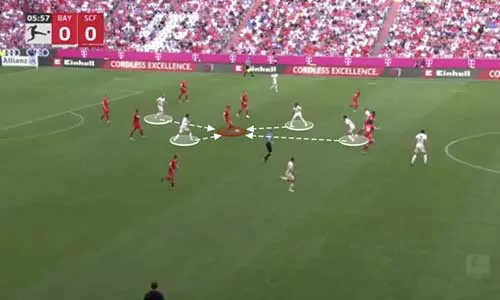
Modern football is defined by its intensity, rapid transitions, and tactical sophistication. Among the various philosophies that have reshaped the global game over the last two decades, one German concept stands out as particularly revolutionary. In this comprehensive tactical analysis, we provide Gegenpressing Explained: The High-Pressure Football Strategy to show how this relentless defensive-offensive hybrid system has dominated elite European competitions and altered the way coaches prepare for matches.
Whether you are an aspiring coach, a tactical analyst, or an avid fan looking to deepen your understanding of the game, mastering the nuances of counter-pressing is essential. This guide breaks down the origins, the physical demands, the tactical variations, and the strategic implementation of modern football’s most demanding system.
Table of Contents
- What is Gegenpressing? Defining the Philosophy
- The Tactical Evolution: Gegenpressing Explained: The High-Pressure Football Strategy
- The Four Variants of Counter-Pressing
- Key Pressing Triggers in High-Pressure Systems
- The Strategic Implementation of Gegenpressing
- Physical and Mental Demands on Players
- Comparing Tactical Approaches (Table)
- How Teams Counter the High Press
- Conclusion and Tactical Takeaways
- Frequently Asked Questions (FAQ)
What is Gegenpressing? Defining the Philosophy
At its core, “Gegenpressing” translates literally from German to “counter-pressing.” It is not merely a defensive tactic used to prevent the opposition from scoring; rather, it is an active playmaker. The fundamental premise is incredibly simple yet tactically complex: the moment a team loses possession in the opposition half, they must immediately attempt to win it back, rather than dropping deep to organize their defensive shape.
The philosophy relies heavily on the transition phase of the game. When a team has just won the ball back, they are highly vulnerable. Their players are expanding outward to transition from a defensive shape to an offensive one. By striking immediately in this precise fraction of a second, the counter-pressing team exploits this momentary disorganization to create high-value goalscoring opportunities close to the opponent’s goal.
To understand this approach, one must recognize that the traditional defensive approach involves retreating to a structured block. Consequently, Gegenpressing flips this paradigm on its head by turning the defensive transition into the primary attacking weapon. This proactive defensive action prevents the opponent from launching structured counter-attacks while simultaneously catching their defensive line out of position.
The Tactical Evolution: Gegenpressing Explained: The High-Pressure Football Strategy
While often associated with contemporary German managers, the roots of this high-octane style run deep in football history. The foundational concepts can be traced back to Ernst Happel’s Feyenoord in the late 1960s and Valeriy Lobanovskyi’s highly disciplined Dynamo Kyiv sides of the 1970s and 1980s. These early innovators recognized that space and time could be systematically choked through coordinated team movements.
Later, Arrigo Sacchi’s legendary AC Milan side refined these concepts by maintaining an incredibly compact defensive block, leaving no more than 25 meters between the forward line and the defensive line. This compactness made it naturally easier to press the opponent immediately upon losing the ball, as support players were always nearby.
In the modern era, Ralf Rangnick served as the godfather of this philosophy in Germany, influencing a generation of coaches including Jürgen Klopp, Julian Nagelsmann, and Thomas Tuchel. By examining UEFA tactical reports, we can see how these principles transitioned from niche experiments into mainstream, elite-level football strategies that dominate European cup tournaments.
Why Modern Managers Adopt Gegenpressing Explained: The High-Pressure Football Strategy
The primary motivation for adopting this strategy is control. In modern football, transitions are chaotic. By utilizing a structured counter-press, a manager seeks to control that chaos. Rather than allowing the opponent to dictate the tempo after a turnover, the pressing team immediately forces the play, dictating where and when the ball is played.
Furthermore, this strategy dramatically reduces the distance a team must travel to score. If a team wins the ball back 18 yards from the opponent’s goal, they are only a pass or two away from a clear shooting opportunity. This is far more efficient than winning the ball in one’s own penalty box and having to build an attack across the entire length of the pitch.
The Four Variants of Counter-Pressing
Not all counter-pressing styles are identical. Depending on the manager’s tactical preferences and the technical profile of the squad, the pressing structure can vary significantly. There are four primary variants recognized in modern tactical theory:
1. Man-Oriented Gegenpressing
Popularized heavily by Jürgen Klopp during his tenure at Borussia Dortmund, this variation requires every player to immediately mark the opponent closest to them once the ball is lost. The objective is to deny any easy passing outlets. If every immediate passing option is tightly marked, the player on the ball is forced into a hurried decision, often resulting in a long clearance or a direct turnover.
2. Space-Oriented Gegenpressing
Associated closely with Pep Guardiola’s tactical setups at Barcelona, Bayern Munich, and Manchester City, this variant focuses on the space surrounding the ball rather than specific individual opponents. The team creates a local numerical superiority around the ball carrier, choking their angles of escape and forcing them into a congested area of the pitch where interception is highly likely.
3. Passing Lane-Oriented Gegenpressing
In this system, the focus is on cutting off the avenues of distribution. The player closest to the ball presses the carrier, while the surrounding teammates position themselves in the passing lanes. Rather than tackling the ball carrier directly, the goal is to bait them into making a pass that has already been anticipated and shut down by a covering defender.
4. Ball-Oriented Gegenpressing
This is the most aggressive and chaotic form of the press. The entire team converges directly on the ball without strict regard for specific opponents or passing lanes. The goal is to overwhelm the ball carrier with sheer numbers and physical pressure, utilizing a “swarm” effect to force an immediate technical error.
Key Pressing Triggers in High-Pressure Systems
Successful implementation of a high-pressure system does not mean running aimlessly at the ball for 90 minutes. Doing so would exhaust the players and leave massive defensive gaps. Instead, the system relies on highly specific “pressing triggers”—on-field events that signal the entire team to initiate the press simultaneously.
- The Poor First Touch: If an opponent miscontrols a pass or takes a heavy touch, they lose immediate control over the ball’s trajectory. This is the ultimate trigger for surrounding players to close in.
- Back-to-Goal Pass: When a player receives a pass with their back to the attacking direction, their field of vision is restricted. They cannot see the defenders closing in from behind, making them highly vulnerable to an interception.
- Passes to the Flanks: The touchline acts as an extra defender. Once the ball is forced wide into a fullback or winger, their passing options are cut in half, making it much easier to trap them.
- Slow or Underhit Passes: A lazy or slow pass gives defenders ample time to read the trajectory and sprint to intercept it before it reaches its target.
The Strategic Implementation of Gegenpressing
To successfully execute this system, a team’s offensive positioning must support its defensive transition. This concept is known as “rest defense” (or Restverteidigung in German). While attacking, the players who are not directly involved in the play must position themselves in a way that allows them to immediately press if the ball is lost.
Therefore, a team cannot attack with complete disregard for their shape. If the attacking shape is too wide or disjointed, the distance between players will be too large to execute an effective press upon losing the ball. The team must remain compact even when in possession, maintaining short distances between lines to ensure a quick transition back into a pressing structure.
To analyze these structural setups, tactical websites such as The Athletic’s football tactical sections offer excellent visual breakdowns of how elite teams maintain their compact structures during possession phases.
Physical and Mental Demands on Players
Implementing this style requires a very specific profile of athlete. It is a physically grueling system that demands elite cardiovascular endurance, rapid acceleration, and the ability to perform high-intensity sprints repeatedly throughout a match.
Equally important are the mental attributes. Players must possess high tactical intelligence to read the game and anticipate where the ball will go. They must also have immense discipline and trust in their teammates; if even one player fails to press their target, the entire defensive structure can collapse, leaving space for the opponent to exploit.
Comparing Tactical Approaches
To understand how this system compares to other popular footballing philosophies, consider the following tactical comparison table:
| Tactical Philosophy | Primary Focus | Defensive Line Position | Key Physical Attribute Required |
|---|---|---|---|
| Gegenpressing | Immediate transition, high-pressure turnovers | High (often near the halfway line) | Sprinting endurance & acceleration |
| Tiki-Taka | Possession retention, short passing circuits | Medium-High | Technical agility & spatial awareness |
| Low Block (Catenaccio) | Deep defensive structure, space denial | Deep (near own penalty box) | Aerobic capacity & physical strength |
How Teams Counter the High Press
No football tactic is invincible. As high-pressure systems became the norm across Europe, opposing managers developed highly effective strategies to bypass and exploit the aggressive press.
One primary method is the use of direct, long-ball tactics. If a team is pressing high up the pitch, they naturally leave a massive amount of space behind their defensive line. By playing direct, aerial balls over the pressing lines to a target man, an opponent can completely bypass the midfield trap and exploit the space in behind.
Another counter is the integration of highly technical, “press-resistant” players in the deeper midfield roles. Players who possess exceptional close control, composure, and passing accuracy can draw the press in, only to play a quick, vertical pass that cuts through the pressing lines, leaving the pressing team caught out of position.
Conclusion and Tactical Takeaways
In summary, the implementation of Gegenpressing Explained: The High-Pressure Football Strategy has radically shifted the landscape of modern football tactics. By transforming defensive transitions into active playmaking opportunities, it forces opponents into high-stress situations, driving technical errors and generating high-quality chances close to goal.
However, the system is not without its risks. It requires exceptional physical conditioning, highly coordinated team movements, and disciplined rest defense to prevent being exposed by direct counter-attacks. As the tactical battle of modern football continues to evolve, understanding these principles is key to appreciating the depth of the beautiful game.
What are your thoughts on this high-intensity strategy?
Do you think modern players can sustain this physical intensity throughout a grueling 60-match season? Let us know your thoughts in the comments section below, and share this article with fellow football enthusiasts!
Frequently Asked Questions (FAQ)
Q1: Who invented Gegenpressing?
A: While popularized in its modern form by German coaches like Ralf Rangnick and Jürgen Klopp, the foundational concepts of immediate pressure after losing possession were developed by Ernst Happel and Valeriy Lobanovskyi in the late 1960s and 1970s.
Q2: What is the main difference between pressing and counter-pressing?
A: Pressing is a general defensive strategy aimed at winning the ball back when the opponent is in structured possession. Counter-pressing (Gegenpressing) specifically occurs during the transition phase, immediately after a team loses the ball in the opponent’s territory.
Q3: How do teams defend against a counter-pressing system?
A: Teams typically defend against it by employing direct, long-ball strategies to bypass the high press entirely, or by utilizing highly technical, press-resistant midfielders who can quickly break through the pressure with precise passes.
Q4: Is Gegenpressing physically unsustainable for an entire season?
A: It can lead to physical burnout and injury if not managed carefully. Modern managers mitigate this by implementing squad rotation, using data-driven load management, and sometimes dropping into a mid-block during matches to conserve energy.
Q5: How does “rest defense” relate to counter-pressing?
A: Rest defense refers to the positioning of your defenders and defensive midfielders while your team is in possession. Good rest defense ensures that if the ball is lost, players are already in position to immediately pressure the opponent and prevent a counter-attack.