UEFA Champions League Winners List: Every Champion Since 1956
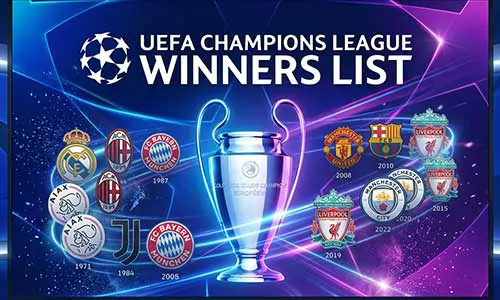
Table of Contents
- 1. Introduction to European Football’s Ultimate Prize
- 2. The Genesis Era: The European Cup (1956–1992)
- 3. The Modern Era: Transition to the Champions League (1992–Present)
- 4. UEFA Champions League Winners List: Every Champion Since 1956
- 5. Tactical Evolution of the Champions League
- 6. Most Successful Clubs in European History
- 7. Dominant Nations in Champions League History
- 8. Legendary Records and Icons
- 9. Frequently Asked Questions (FAQ)
- 10. Conclusion and the Future of the Tournament
Few sporting events globally capture the imagination of football fans like the premier European club tournament. For football enthusiasts worldwide, the ultimate compilation of club football greatness is encapsulated in the UEFA Champions League Winners List: Every Champion Since 1956. This comprehensive historical record documents the ascension of tactical masterminds, iconic squads, and legendary athletes who have defined generations. From the early dominance of Real Madrid in the mid-1950s to the modern, high-intensity tactical battles of the 21st century, this list is a testament to the evolution of the beautiful game.
Originally established as the European Champion Clubs’ Cup, the tournament began as a straightforward knockout competition for domestic league champions. Over the decades, it evolved into a multi-billion dollar spectacle known as the UEFA Champions League. Consequently, winning this trophy is widely considered the pinnacle of club football achievement, overshadowing even domestic league titles in prestige and global recognition.
In this detailed guide, we will explore the complete history, analyze the dominant eras, and present the definitive UEFA Champions League Winners List: Every Champion Since 1956. Whether you are looking to settle a debate or research football history, you will find every crucial statistic, final score, and historic context right here.
The Genesis Era: The European Cup (1956–1992)
The concept of a pan-European club competition was first proposed by the French sports journalist Gabriel Hanot. He envisioned a tournament that would crown the absolute best club side on the continent. The inaugural tournament kicked off during the 1955–1956 season. During this foundational era, the tournament was known colloquially as the European Cup, featuring a pure knockout format that left zero room for error.
Real Madrid immediately established themselves as the dominant force in this new landscape. Led by the incomparable Alfredo Di Stéfano and later Ferenc Puskás, the Spanish club captured the first five consecutive titles. This remarkable achievement set a benchmark of excellence that has never been repeated, establishing their enduring love affair with the famous trophy.
However, the 1960s saw a shift in continental power. Portuguese powerhouse Benfica, inspired by the legendary Eusébio, broke Real Madrid’s monopoly by winning back-to-back titles in 1961 and 1962. Shortly after, the Italian giants of Milan—both AC Milan and Inter Milan—introduced the defensive mastery of *Catenaccio* to the European stage, capturing four titles between them during the decade.
The 1970s ushered in a revolution of tactical philosophy known as “Total Football.” Pioneered by Ajax and spearheaded by Johan Cruyff, the Dutch side claimed three consecutive titles from 1971 to 1973. This tactical evolution was quickly matched by Germany’s Bayern Munich, led by Franz Beckenbauer and Gerd Müller, who secured their own hat-trick of titles from 1974 to 1976. This era highlighted how structural tactical innovations could completely dominate the European landscape.
Following the German dominance, English clubs initiated an unprecedented era of supremacy. Between 1977 and 1984, clubs from England won seven out of eight trophies. Liverpool led the charge with four titles, while Nottingham Forest achieved a miraculous back-to-back triumph under Brian Clough. Aston Villa also added their name to the illustrious list in 1982, solidifying England’s tactical and physical dominance during this golden era.
The Modern Era: Transition to the Champions League (1992–Present)
In 1992, UEFA rebranded the competition to the UEFA Champions League, introducing a group stage format to replace the strictly knockout rounds. This structural change guaranteed more matches between elite clubs, dramatically increasing television revenue and global viewership. Consequently, the competition transformed into the commercial and sporting giant we recognize today.
The rebranding democratized access to the tournament by eventually allowing non-champions from top leagues to qualify. Marseille was the inaugural winner of the newly formatted competition in 1993, though their victory was later overshadowed by domestic controversies. Soon after, AC Milan put on a masterclass performance in 1994, defeating Barcelona’s “Dream Team” 4-0 in one of the most famous finals in history.
The late 1990s and early 2000s were defined by dramatic narratives. Manchester United secured a historic continental treble in 1999 with two injury-time goals against Bayern Munich. Real Madrid also reasserted their continental dominance, winning three titles in five years between 1998 and 2002, culminating in Zinedine Zidane’s legendary volley in Glasgow.
In 2005, the world witnessed the “Miracle of Istanbul,” where Liverpool overcame a 3-0 halftime deficit against AC Milan to win on penalties. This dramatic final emphasized the unpredictable nature of the tournament, cementing its status as the peak of football drama.
Subsequently, the late 2000s and 2010s were dominated by the Spanish rivalry between Barcelona and Real Madrid. Under Pep Guardiola, Barcelona revolutionized modern football with their *Tiki-Taka* style, winning titles in 2009 and 2011. Real Madrid then responded by winning an incredible four titles in five years under Carlo Ancelotti and Zinedine Zidane, including an unprecedented modern three-peat from 2016 to 2018.
The Definitive UEFA Champions League Winners List: Every Champion Since 1956
To fully appreciate the scope of European football history, one must examine the progression of champions. Below is the complete, official UEFA Champions League winners list: every champion since 1956, including the runners-up, final scores, and host venues for each season.
| Season | Winner | Score | Runner-up | Host Venue |
|---|---|---|---|---|
| 1955–56 | Real Madrid (ESP) | 4–3 | Reims (FRA) | Parc des Princes, Paris |
| 1956–57 | Real Madrid (ESP) | 2–0 | Fiorentina (ITA) | Santiago Bernabéu, Madrid |
| 1957–58 | Real Madrid (ESP) | 3–2 (aet) | AC Milan (ITA) | Heysel Stadium, Brussels |
| 1958–59 | Real Madrid (ESP) | 2–0 | Reims (FRA) | Neckarstadion, Stuttgart |
| 1959–60 | Real Madrid (ESP) | 7–3 | Eintracht Frankfurt (GER) | Hampden Park, Glasgow |
| 1960–61 | Benfica (POR) | 3–2 | Barcelona (ESP) | Wankdorf Stadium, Bern |
| 1961–62 | Benfica (POR) | 5–3 | Real Madrid (ESP) | Olympisch Stadion, Amsterdam |
| 1962–63 | AC Milan (ITA) | 2–1 | Benfica (POR) | Wembley Stadium, London |
| 1963–64 | Inter Milan (ITA) | 3–1 | Real Madrid (ESP) | Praterstadion, Vienna |
| 1964–65 | Inter Milan (ITA) | 1–0 | Benfica (POR) | San Siro, Milan |
| 1965–66 | Real Madrid (ESP) | 2–1 | Partizan (YUG) | Heysel Stadium, Brussels |
| 1966–67 | Celtic (SCO) | 2–1 | Inter Milan (ITA) | Estádio Nacional, Lisbon |
| 1967–68 | Manchester United (ENG) | 4–1 (aet) | Benfica (POR) | Wembley Stadium, London |
| 1968–69 | AC Milan (ITA) | 4–1 | Ajax (NED) | Santiago Bernabéu, Madrid |
| 1969–70 | Feyenoord (NED) | 2–1 (aet) | Celtic (SCO) | San Siro, Milan |
| 1970–71 | Ajax (NED) | 2–0 | Panathinaikos (GRE) | Wembley Stadium, London |
| 1971–72 | Ajax (NED) | 2–0 | Inter Milan (ITA) | De Kuip, Rotterdam |
| 1972–73 | Ajax (NED) | 1–0 | Juventus (ITA) | Red Star Stadium, Belgrade |
| 1973–74 | Bayern Munich (GER) | 4–0 (replay) | Atlético Madrid (ESP) | Heysel Stadium, Brussels |
| 1974–75 | Bayern Munich (GER) | 2–0 | Leeds United (ENG) | Parc des Princes, Paris |
| 1975–76 | Bayern Munich (GER) | 1–0 | Saint-Étienne (FRA) | Hampden Park, Glasgow |
| 1976–77 | Liverpool (ENG) | 3–1 | Borussia M’gladbach (GER) | Stadio Olimpico, Rome |
| 1977–78 | Liverpool (ENG) | 1–0 | Club Brugge (BEL) | Wembley Stadium, London |
| 1978–79 | Nottingham Forest (ENG) | 1–0 | Malmö FF (SWE) | Olympiastadion, Munich |
| 1979–80 | Nottingham Forest (ENG) | 1–0 | Hamburg (GER) | Santiago Bernabéu, Madrid |
| 1980–81 | Liverpool (ENG) | 1–0 | Real Madrid (ESP) | Parc des Princes, Paris |
| 1981–82 | Aston Villa (ENG) | 1–0 | Bayern Munich (GER) | De Kuip, Rotterdam |
| 1982–83 | Hamburg (GER) | 1–0 | Juventus (ITA) | Olympic Stadium, Athens |
| 1983–84 | Liverpool (ENG) | 1–1 (4–2 pen) | Roma (ITA) | Stadio Olimpico, Rome |
| 1984–85 | Juventus (ITA) | 1–0 | Liverpool (ENG) | Heysel Stadium, Brussels |
| 1985–86 | Steaua București (ROU) | 0–0 (2–0 pen) | Barcelona (ESP) | Ramón Sánchez Pizjuán, Seville |
| 1986–87 | Porto (POR) | 2–1 | Bayern Munich (GER) | Praterstadion, Vienna |
| 1987–88 | PSV Eindhoven (NED) | 0–0 (6–5 pen) | Benfica (POR) | Neckarstadion, Stuttgart |
| 1988–89 | AC Milan (ITA) | 4–0 | Steaua București (ROU) | Camp Nou, Barcelona |
| 1989–90 | AC Milan (ITA) | 1–0 | Benfica (POR) | Praterstadion, Vienna |
| 1990–91 | Red Star Belgrade (YUG) | 0–0 (5–3 pen) | Marseille (FRA) | Stadio San Nicola, Bari |
| 1991–92 | Barcelona (ESP) | 1–0 (aet) | Sampdoria (ITA) | Wembley Stadium, London |
| 1992–93 | Marseille (FRA) | 1–0 | AC Milan (ITA) | Olympiastadion, Munich |
| 1993–94 | AC Milan (ITA) | 4–0 | Barcelona (ESP) | Olympic Stadium, Athens |
| 1994–95 | Ajax (NED) | 1–0 | AC Milan (ITA) | Ernst-Happel-Stadion, Vienna |
| 1995–96 | Juventus (ITA) | 1–1 (4–2 pen) | Ajax (NED) | Stadio Olimpico, Rome |
| 1996–97 | Borussia Dortmund (GER) | 3–1 | Juventus (ITA) | Olympiastadion, Munich |
| 1997–98 | Real Madrid (ESP) | 1–0 | Juventus (ITA) | Amsterdam Arena, Amsterdam |
| 1998–99 | Manchester United (ENG) | 2–1 | Bayern Munich (GER) | Camp Nou, Barcelona |
| 1999–00 | Real Madrid (ESP) | 3–0 | Valencia (ESP) | Stade de France, Saint-Denis |
| 2000–01 | Bayern Munich (GER) | 1–1 (5–4 pen) | Valencia (ESP) | San Siro, Milan |
| 2001–02 | Real Madrid (ESP) | 2–1 | Bayer Leverkusen (GER) | Hampden Park, Glasgow |
| 2002–03 | AC Milan (ITA) | 0–0 (3–2 pen) | Juventus (ITA) | Old Trafford, Manchester |
| 2003–04 | Porto (POR) | 3–0 | Monaco (FRA) | Arena AufSchalke, Gelsenkirchen |
| 2004–05 | Liverpool (ENG) | 3–3 (3–2 pen) | AC Milan (ITA) | Atatürk Olympic Stadium, Istanbul |
| 2005–06 | Barcelona (ESP) | 2–1 | Arsenal (ENG) | Stade de France, Saint-Denis |
| 2006–07 | AC Milan (ITA) | 2–1 | Liverpool (ENG) | Olympic Stadium, Athens |
| 2007–08 | Manchester United (ENG) | 1–1 (6–5 pen) | Chelsea (ENG) | Luzhniki Stadium, Moscow |
| 2008–09 | Barcelona (ESP) | 2–0 | Manchester United (ENG) | Stadio Olimpico, Rome |
| 2009–10 | Inter Milan (ITA) | 2–0 | Bayern Munich (GER) | Santiago Bernabéu, Madrid |
| 2010–11 | Barcelona (ESP) | 3–1 | Manchester United (ENG) | Wembley Stadium, London |
| 2011–12 | Chelsea (ENG) | 1–1 (4–3 pen) | Bayern Munich (GER) | Allianz Arena, Munich |
| 2012–13 | Bayern Munich (GER) | 2–1 | Borussia Dortmund (GER) | Wembley Stadium, London |
| 2013–14 | Real Madrid (ESP) | 4–1 (aet) | Atlético Madrid (ESP) | Estádio da Luz, Lisbon |
| 2014–15 | Barcelona (ESP) | 3–1 | Juventus (ITA) | Olympiastadion, Berlin |
| 2015–16 | Real Madrid (ESP) | 1–1 (5–3 pen) | Atlético Madrid (ESP) | San Siro, Milan |
| 2016–17 | Real Madrid (ESP) | 4–1 | Juventus (ITA) | National Stadium of Wales, Cardiff |
| 2017–18 | Real Madrid (ESP) | 3–1 | Liverpool (ENG) | NSC Olimpiyskiy, Kyiv |
| 2018–19 | Liverpool (ENG) | 2–0 | Tottenham Hotspur (ENG) | Metropolitano Stadium, Madrid |
| 2019–20 | Bayern Munich (GER) | 1–0 | Paris Saint-Germain (FRA) | Estádio da Luz, Lisbon |
| 2020–21 | Chelsea (ENG) | 1–0 | Manchester City (ENG) | Estádio do Dragão, Porto |
| 2021–22 | Real Madrid (ESP) | 1–0 | Liverpool (ENG) | Stade de France, Saint-Denis |
| 2022–23 | Manchester City (ENG) | 1–0 | Inter Milan (ITA) | Atatürk Olympic Stadium, Istanbul |
| 2023–24 | Real Madrid (ESP) | 2–0 | Borussia Dortmund (GER) | Wembley Stadium, London |
Tactical Evolution of the Champions League
To fully comprehend the shifts in the UEFA Champions League winners list: every champion since 1956, one must analyze how tactical philosophies have progressed over nearly seven decades. The tactical setup of teams has historically dictated which leagues and nations dominated specific eras.
During the late 1950s and 1960s, attacking fluidity was paramount. Teams relied heavily on individual brilliance, with formations like the WM or 3-2-5 emphasizing forward power. However, Inter Milan’s *Catenaccio* system under Helenio Herrera revolutionized European tactics by prioritizing structural discipline, a deep defensive screen, and rapid counter-attacks. This shift proved that organized defensive structures could reliably dismantle superior individual talents.
In the 1970s, the emergence of “Total Football” revolutionized these rigid structures. Developed by Rinus Michels and executed flawlessly by Johan Cruyff at Ajax, this philosophy allowed outfield players to fluidly interchange positions. Consequently, opposition defenders struggled to mark players effectively, leading to Ajax’s three consecutive European titles. This system laid the foundation for modern spatial awareness and high-pressing systems.
The 21st century has seen the rise of *Tiki-Taka* and *Gegenpressing*. Pep Guardiola’s Barcelona utilized short, precise passing and high positional possession to suffocate opponents. Conversely, German managers like Jürgen Klopp introduced *Gegenpressing*—an intense, high-octane system where teams immediately press to win back the ball in the opposition half. Today, the modern UEFA Champions League winner must possess a highly sophisticated blend of both possession mastery and defensive transition speed.
Most Successful Clubs in European History
When studying the historical records, certain elite clubs have managed to rise above the rest, repeatedly adding their names to the winner’s circle. Below is a detailed look at the clubs that have dominated this tournament since its inception in 1956.
- Real Madrid (15 Titles): Unquestionably the kings of Europe. From their five-peat in the 1950s to their modern dominance in the 2010s and 2020s, Real Madrid has built their entire club identity around winning this specific trophy.
- AC Milan (7 Titles): Italy’s most successful representative. AC Milan dominated the late 1980s and early 1990s under Arrigo Sacchi and Fabio Capello, playing some of the most tactically perfect football the continent has ever witnessed.
- Bayern Munich (6 Titles): The powerhouse of German football. Bayern’s consistency across multiple decades—winning three straight in the 1970s, achieving the treble in 2013, and winning again in 2020—demonstrates their enduring excellence.
- Liverpool (6 Titles): England’s undisputed European royalty. Under legendary managers like Bob Paisley and later Jürgen Klopp, Liverpool’s historic nights at Anfield have become synonymous with European football lore.
- Barcelona (5 Titles): Known for playing some of the most attractive football in history. Barcelona’s peak eras under Frank Rijkaard, Pep Guardiola, and Luis Enrique yielded five trophies, defining the style of modern football.
Dominant Nations in Champions League History
While individual clubs celebrate victories, their success often reflects the overall strength of their domestic leagues. Historically, three main leagues have dominated the continental stage, sharing the vast majority of trophies.
Spain (La Liga) leads the historical standings, primarily due to the historic dominance of Real Madrid and Barcelona. Spanish clubs have displayed an extraordinary ability to win finals, rarely losing when they reach the ultimate stage of the competition.
England (Premier League) boasts the highest number of unique winning clubs (6 clubs: Liverpool, Manchester United, Chelsea, Nottingham Forest, Aston Villa, and Manchester City). This variety highlights the competitive depth and financial power of English football across different eras.
Italy (Serie A) dominated the late 1980s and 1990s. Known for producing masterfully organized defensive teams, Italian clubs like AC Milan, Juventus, and Inter Milan have reached a combined total of nearly 30 finals, establishing Serie A as a historically elite tactical league.
Legendary Records and Icons
The history of the UEFA Champions League is also a story of extraordinary individual achievements. Several legendary players and managers have left an indelible mark on the competition, breaking records that may stand for decades.
Carlo Ancelotti stands as the most successful manager in tournament history, having won the trophy 5 times (twice with AC Milan, three times with Real Madrid). His exceptional man-management and tactical flexibility have made him the ultimate specialist in knockout tournament football.
Among players, Cristiano Ronaldo remains the tournament’s all-time top goalscorer. Known as “Mr. Champions League,” Ronaldo has won the trophy five times and holds the record for the most goals scored in a single Champions League season (17 goals in 2013-14). His intense rivalry with Lionel Messi, who has won four titles with Barcelona, elevated the tournament’s global profile to unprecedented heights during the 2010s.
Furthermore, Francisco “Paco” Gento holds the incredible record for the most titles won by a single player. As a crucial member of the legendary Real Madrid squad of the 1955-1966 era, Gento won the European Cup six times, a milestone that remains unmatched to this day.
For more detailed statistics, individual player records, and modern updates, you can explore the official UEFA Champions League Official Website.
Frequently Asked Questions (FAQ)
Q1: Which club has won the most UEFA Champions League titles?
Real Madrid is the most successful club in the tournament’s history, having won the title 15 times, followed by AC Milan with 7 titles.
Q2: What is the difference between the European Cup and the Champions League?
The European Cup (1956–1992) was a straight knockout tournament featuring only domestic league champions. The Champions League (1992–Present) introduced a group stage format and allowed multiple entries from top-tier leagues.
Q3: Who is the all-time top scorer in Champions League history?
Cristiano Ronaldo is the all-time leading scorer in the competition, followed closely by Lionel Messi and Robert Lewandowski.
Q4: Has any team won the Champions League three times in a row in the modern era?
Yes, Real Madrid is the only club in the modern Champions League era to achieve this feat, winning three consecutive titles in 2016, 2017, and 2018 under manager Zinedine Zidane.
Q5: Which manager has won the most Champions League titles?
Carlo Ancelotti holds the record for the most titles won by a manager, with five trophies secured across his spells at AC Milan and Real Madrid.
Q6: How many clubs have won the treble (League, Cup, and Champions League)?
Seven clubs have achieved the prestigious continental treble: Celtic (1967), Ajax (1972), PSV Eindhoven (1988), Manchester United (1999), Barcelona (2009, 2015), Bayern Munich (2013, 2020), and Manchester City (2023).
Conclusion and the Future of the Tournament
In conclusion, reviewing the UEFA Champions League winners list: every champion since 1956 reveals the extraordinary evolution of professional football. From its humble origins as a simple knockout Cup to its status as the pinnacle of global sports entertainment, the tournament continues to inspire and captivate millions of fans worldwide. It remains the stage where legends are born and footballing dynasties are immortalized.
As UEFA continues to innovate, including introducing new group stage formats designed to create even more high-stakes matches, the tournament’s competitive level will only increase. Consequently, the battle to join this prestigious list of champions will remain the ultimate objective for every elite club on the continent.
What is your favorite Champions League final of all time? Do you believe Real Madrid’s record of 15 titles will ever be broken by another European giant? Share your thoughts with us in the comments below, and share this comprehensive historical list with your fellow football fans!
For a deeper dive into the tactical setups of these historic finals, check out the comprehensive tactical breakdowns archived on the official UEFA Champions League History Archive.