What Happens to Players’ Jerseys After Football Matches?
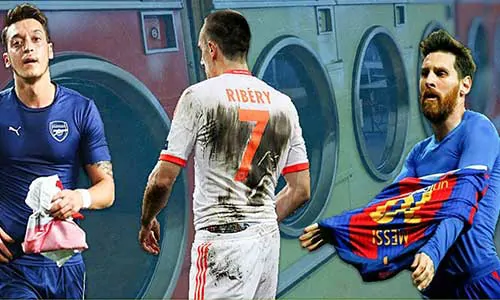
Have you ever sat on your couch, watching the referee blow the final whistle, and wondered, what happens to players’ jerseys after football matches? The post-match environment is filled with emotion, celebrations, and sometimes disappointment. Yet, beneath the surface of the beautiful game lies a highly organized logistical operation. From legendary shirt swaps to intensive industrial cleaning and high-value charity auctions, the journey of a match-worn shirt is far more complex than it appears on television.
For football enthusiasts and memorabilia collectors alike, these jerseys carry immense sentimental and financial value. Consequently, professional clubs have established precise systems to manage this gear. In this comprehensive guide, we will explore the hidden pipeline of professional sports kits, breaking down the exact processes that dictate the fate of these iconic pieces of fabric.
Table of Contents
- 1. Post-Match Traditions: The Iconic Shirt Swap
- 2. Behind the Scenes: What Happens to Players’ Jerseys After Football Matches?
- 3. The Rigorous Laundry and Restoration Process
- 4. Commercial and Charitable Routes for Match-Worn Kits
- 5. The Financial Reality: Who Pays for the Jerseys?
- 6. Why What Happens to Players’ Jerseys After Football Matches Matters to Fans
- 7. Quick Summary of a Football Shirt’s Post-Match Journey
- 8. Frequently Asked Questions (FAQs)
1. Post-Match Traditions: The Iconic Shirt Swap
One of the most visible answers to what occurs after the game is the historic tradition of shirt swapping. This practice dates back to 1931, when players from France and England exchanged jerseys as a token of mutual respect. Today, this ritual remains a cornerstone of sportsmanship at the end of ninety minutes.
When high-profile stars exchange shirts, those garments typically enter private collections. For example, young players often cherish the opportunity to swap jerseys with icons like Lionel Messi or Cristiano Ronaldo. Consequently, these swapped items are framed and displayed in private homes rather than being returned to the club’s inventory.
However, shirt swapping is not always random. In major tournaments, players sometimes coordinate swaps beforehand. This peer-to-peer exchange is the most immediate way a jersey transitions from active sportswear to a priceless piece of historical memorabilia.
2. Behind the Scenes: What Happens to Players’ Jerseys After Football Matches?
To fully comprehend what happens to players’ jerseys after football matches, one must look closely at the unsung heroes of the stadium: the kit management team. Every professional club employs a dedicated kit manager who oversees the preparation, distribution, and reclamation of all player gear.
Typically, a kit manager prepares at least three jerseys for each player per match. This includes one for the first half, one for the second half, and a spare third jersey in case of tearing, blood stains, or unexpected damage. Consequently, a massive volume of clean fabric must be organized before the team even steps onto the pitch.
Additionally, modern kits are embedded with advanced GPS tracking vests worn underneath the jersey. Once the match concludes, the kit staff must carefully collect these high-tech vests to extract athletic performance data. The jerseys themselves are then sorted based on their immediate destination: some are destined for the wash, others for charity, and some for immediate preservation.
The Contrast with Lower-League Clubs
While elite clubs in the English Premier League or La Liga can afford to cycle through hundreds of shirts per season, lower-league clubs operate under strict budgetary constraints. In these settings, players are often allocated a limited number of jerseys for the entire season.
If a player in the lower divisions swaps their shirt or gives it to a fan, they may be required to pay for its replacement out of their own pocket. Therefore, the scale and luxury of kit disposal are directly tied to a club’s financial stature.
3. The Rigorous Laundry and Restoration Process
For shirts that are neither swapped nor given away, the next stop is the industrial washing facility located within the club’s training ground. If you assume these grass-stained, sweat-soaked garments are discarded, you would be mistaken.
Kit managers utilize specialized, commercial-grade washing machines and stain-removal agents designed to handle tough grass, mud, and blood stains. The goal is to restore the jersey to mint condition so it can be re-worn in subsequent training sessions or upcoming matches.
Furthermore, the cleaning process must preserve the integrity of the heat-pressed vinyl elements, such as player numbers, names, and sponsor logos. Because high heat can damage these delicate decals, jerseys are washed at specific, cool temperatures and air-dried rather than being tossed into high-heat tumble dryers.
4. Commercial and Charitable Routes for Match-Worn Kits
When exploring what happens to players’ jerseys after football matches, charity auctions emerge as a highly impactful pathway. In the modern era, many elite clubs partner with specialized auction platforms to raise funds for local and global communities.
Instead of going into a washing machine, some match-worn shirts are placed directly into sealed bags immediately after the game. This preserves the authenticity of the item, complete with dirt and sweat marks, which collectors highly value. Platforms like MatchWornShirt facilitate these live auctions, allowing fans around the world to bid on authentic pieces of sporting history.
In addition to organized auctions, clubs often donate shirts directly to non-profit organizations, community foundations, and hospital wards. These donations provide powerful fundraising opportunities, as a single signed, match-worn jersey can fetch thousands of dollars at a charity gala.
5. The Financial Reality: Who Pays for the Jerseys?
A common misconception among football fans is that players have an infinite supply of free clothing. In reality, kit sponsorships play a major role in how these assets are managed. Brands like Adidas, Nike, and Puma supply clubs with a predetermined allocation of gear each season as part of multi-million dollar sponsorship deals according to FIFA equipment regulations.
Once a club exceeds its allocated limit of gear, they must purchase additional kits at a wholesale rate. For top-tier clubs, this is a minor operational expense. However, for smaller clubs, tracking every single shirt is vital to maintaining financial health.
Moreover, players are generally discouraged from giving away their jerseys too frequently without coordination. While superstars can do so with minimal consequence, younger squad members must remain mindful of the club’s equipment policies.
6. Why What Happens to Players’ Jerseys After Football Matches Matters to Fans
The journey of these garments is not just a matter of logistics; it also deeply affects fan culture and the sports memorabilia market. For a passionate supporter, acquiring a match-worn jersey is the ultimate achievement of fandom.
Unlike standard replica shirts purchased at a club shop, a match-worn jersey features specific characteristics:
- Authentic player-issue sizing and athletic cuts.
- Screen-printed washing instructions instead of itchy inner tags.
- Slight imperfections, scuff marks, or grass stains from the pitch.
- Exclusive sleeve patches corresponding to specific tournaments.
Consequently, understanding what happens to players’ jerseys after football matches helps collectors spot counterfeits and appreciate the true rarity of genuine match-worn items. The emotional connection linked to these physical objects ensures that the demand for post-match kits will continue to rise.
7. Quick Summary of a Football Shirt’s Post-Match Journey
To help visualize the entire pipeline, the table below outlines the primary destinations of a football shirt once the match concludes.
| Destination | Primary Purpose | Key Beneficiary |
|---|---|---|
| Opposing Player | Traditional post-match shirt swap to show mutual respect. | The player’s personal collection. |
| Charity Auction | Sold unwashed to raise funds for community foundations. | Charitable organizations and global fans. |
| Industrial Laundry | Washed, dried, and prepared for future training or matches. | The club’s active kit inventory. |
| Club Archive | Stored in the stadium museum to preserve historical milestones. | Future generations of club supporters. |
8. Frequently Asked Questions (FAQs)
Q1: Do football players get a new jersey for every match?
In elite leagues, players typically wear new or freshly washed jerseys for each half of a match. However, lower-league clubs frequently reuse washed jerseys throughout the season due to tighter budgets.
Q2: What happens to players’ jerseys after football matches if they swap them?
Once swapped, the jerseys belong to the opposing players. They are usually kept in private homes, displayed in home gyms, or eventually passed down as valuable family heirlooms.
Q3: Are dirty or muddy jerseys washed before they are auctioned?
Surprisingly, no. Many high-end auctions sell shirts completely unwashed. The mud, grass, and sweat stains serve as physical proof of authenticity, making the jersey more valuable to collectors.
Q4: Do players have to pay if they give their jersey to a fan?
At the highest professional level, players are rarely fined or charged for giving a shirt to a fan. In contrast, players in semi-professional or lower-tier divisions may have the cost of the kit deducted from their wages if they exceed their minor allowance.
Q5: How many backup jerseys does a kit manager prepare?
A kit manager typically prepares three jerseys per player per game. This ensures a fresh shirt is available for each half, along with an extra backup in case of tears or unexpected damage during play.
Q6: How do clubs verify that a shirt was actually worn in a match?
Professional clubs and auction houses use photometric matching, unique serial numbers on the tags, and official certificates of authenticity signed by club officials to guarantee a shirt was match-worn.
Conclusion
In conclusion, the mystery of what happens to players’ jerseys after football matches reveals a highly efficient blend of tradition, philanthropy, and logistical precision. While some shirts become treasured tokens of mutual respect between players, others serve a higher purpose by raising vital funds for charities globally. For the remaining kits, meticulous care ensures they are cleaned, restored, and ready for action in the next fixture.
The journey of a football jersey highlights how a simple piece of athletic fabric can become a symbol of sportsmanship, a valuable collector’s item, or a beacon of support for community programs. As fans, the next time we watch a player walk off the pitch, we can appreciate the silent, organized journey their jersey is about to undertake.
What is your take?
Have you ever tried to collect a match-worn shirt, or would you prefer to keep a pristine replica? Let us know your thoughts in the comments section below, and share this article with your fellow football fans!